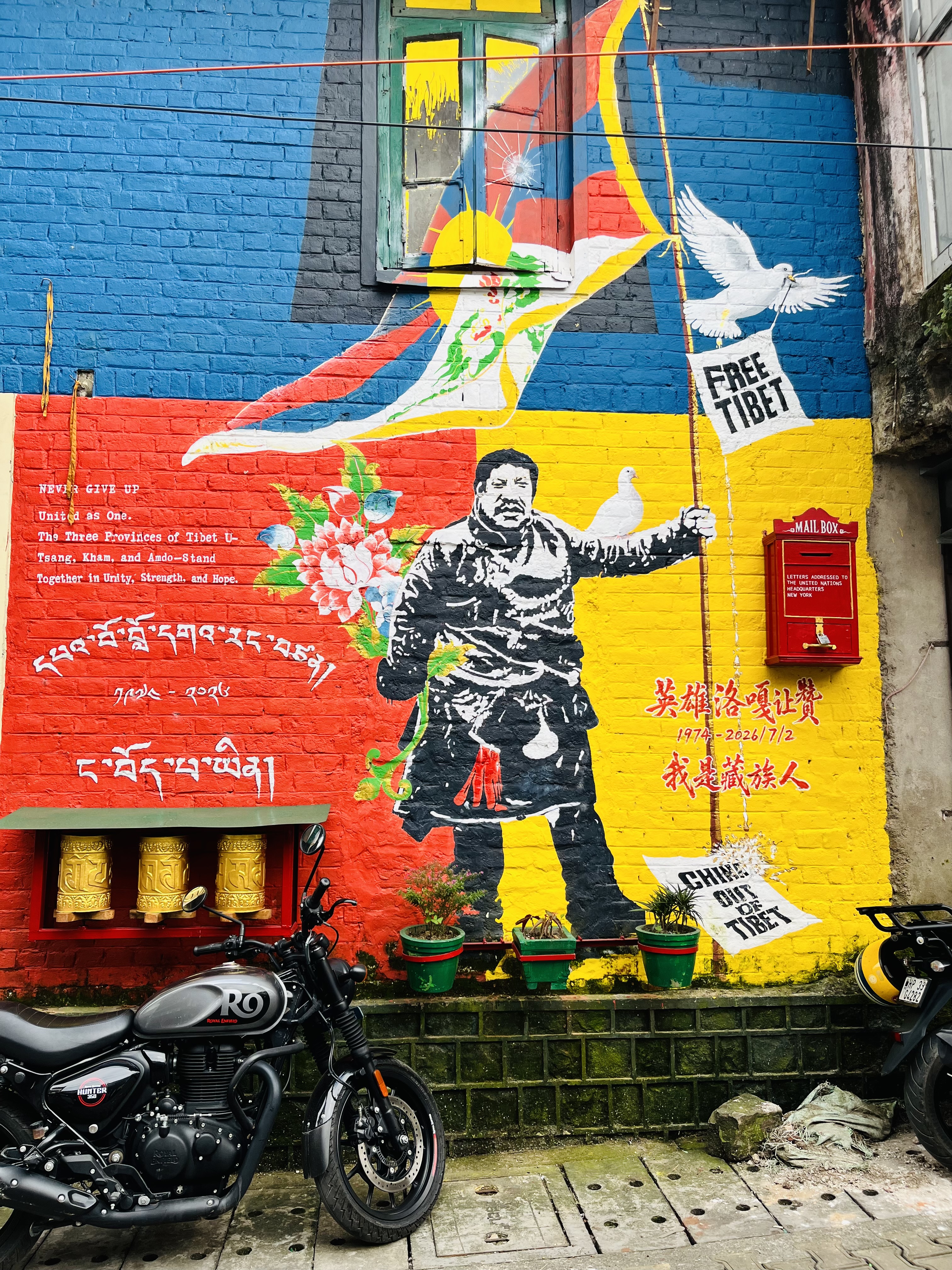
Dharamshala is the home of Dalai Lama and, by extension, Tibetan Buddhism. It’s a small city perched along wooded hillsides about 300 miles north of Delhi. I engaged a taxi to drive me from the region’s tiny airport to my hotel in McLeodganj, but arrived on foot after what was, for me, a terrifying ride up the mountain — or in my case, part of the mountain. The city is lively but not chaotic like so much of India, and it feels different because the culture is predominantly Tibetan. And the cool climate of Dharamshala was a relief after spending several weeks in the intense heat of China and Sri Lanka.
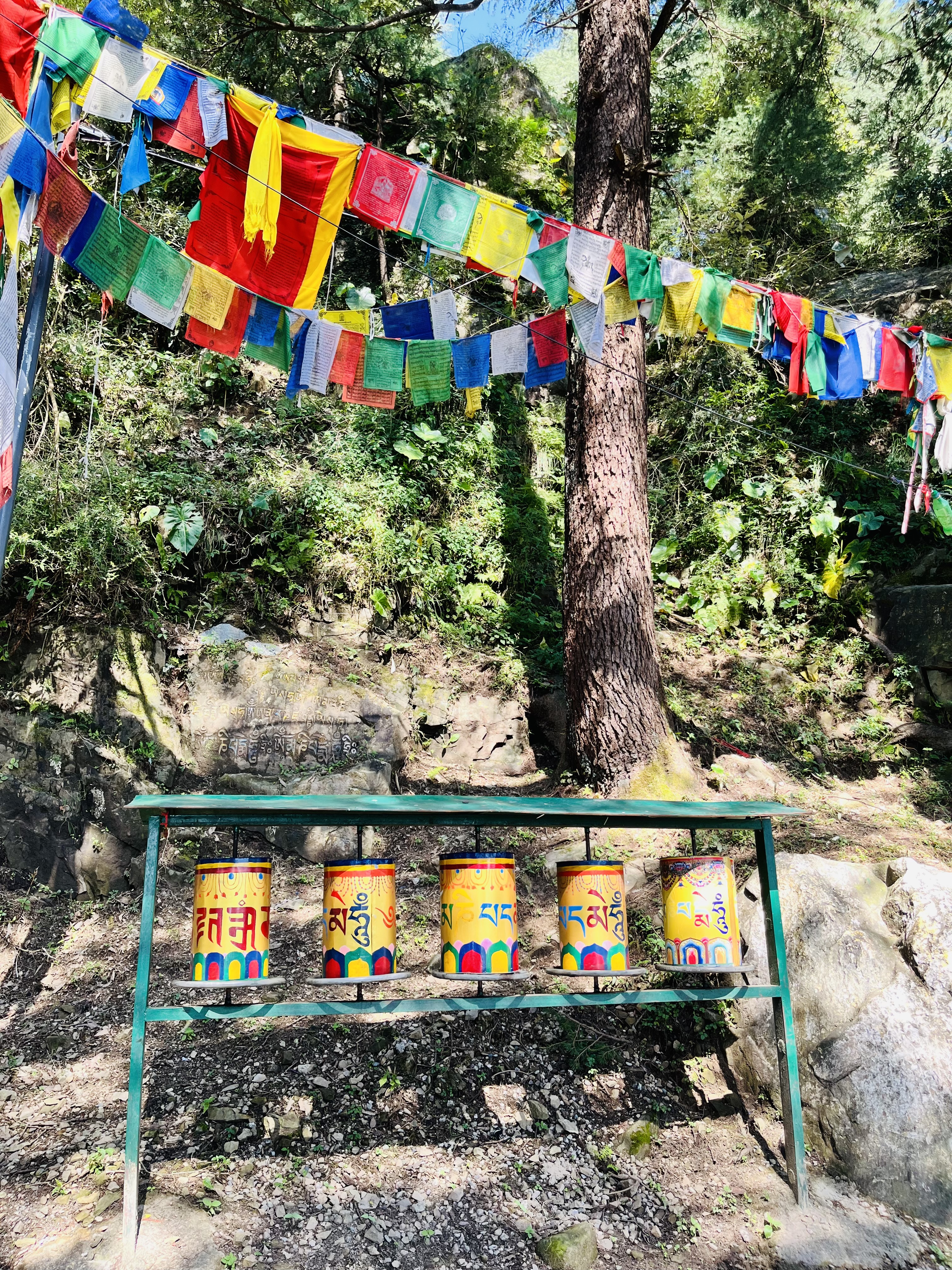
Dharamshala has a fascinating history — of course! The Dalai Lama and his entourage left Tibetan China in 1959 on horseback on a treacherous ride through the mountains. Although he’d signed an agreement with the Chinese in 1951 annexing Tibet to China, he ultimately feared persecution by the Chinese authorities, and settled in this remote region, where the Indian government granted him political asylum. The Dalai Lama considers himself part of a government in exile.
At 91, the 14th Dalai Lama is still sharing his wisdom at public events and regular blessings in his home town of McLeodganj (Dharamshala is a city but also the name of the region — the Dalai Lama is in McLeodganj). For those of us wondering who the 15th Dalai Lama will be, it’s a premature question. Our 14th Dalai Lama recently announced at his birthday celebration that his dreams indicate that he will live to 130 years old.
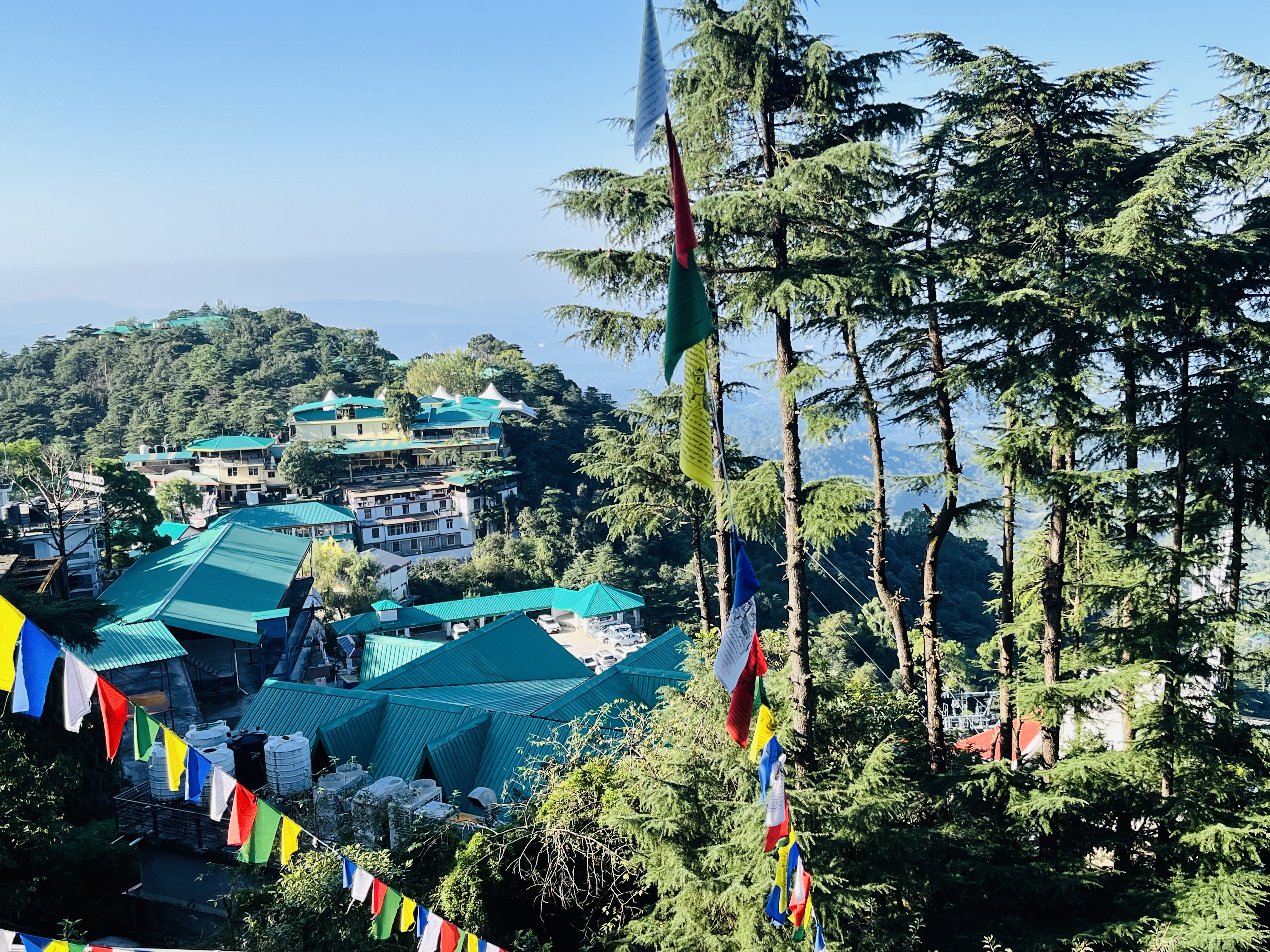
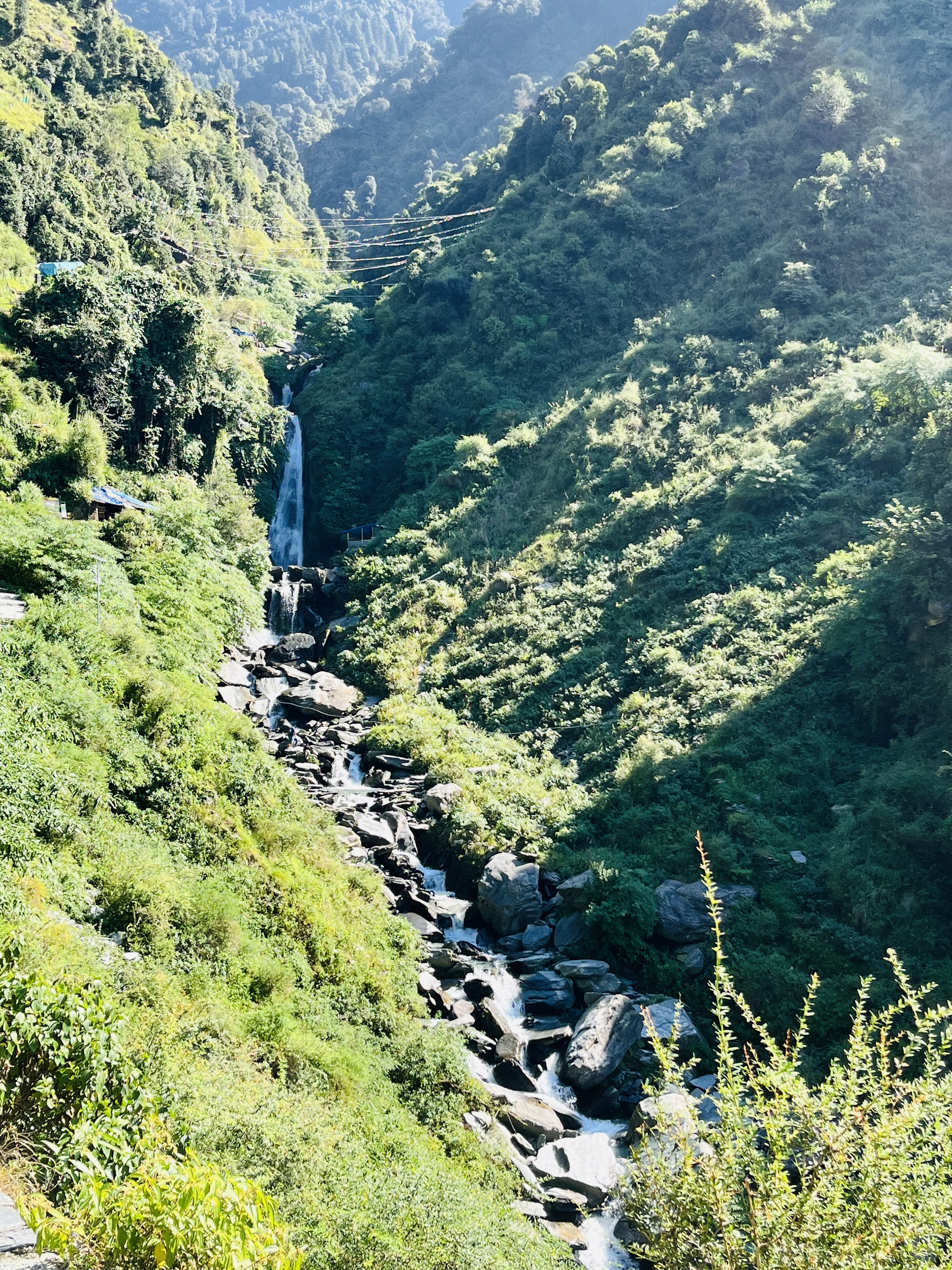
I didn’t see the Dali Lama during my week overlooking his residence and temple because I didn’t know you needed to apply well in advance to attend his regular address and blessing. I guess I should know better at this point in my travels, but that’s ok. I loved being in his aura. The temple was beautiful (although surprisingly busy and noisy even during prayer times). I got to know the friendly town, circumambulated the temple complex, and hiked through the hills to a sacred water fall, past kiosks selling water and locals chanting or playing music.
And that’s not all. I learned another side of a very complex story during my short retreat in Dharamshala, where “Free Tibet” is a common subject of art and graffiti. Most Tibetans are still fighting for Tibet’s sovereignty and consider China’s 75-year occupation an unlawful invasion. Since 1951, China has, according to many, taken steps to destroy Tibetan culture and the lifestyles of nomadic ethnic tribes, populating the region with majority Han Chinese who benefit most from government programs. Others tell a different story, namely, that before China annexed Tibet, the Dalai Lama’s government presided over a serfdom where millions lived in dire poverty. After occupying Tibet in 1951, the Chinese government stated its intent to modernize the region and eliminate its feudal economy. Although the Dalai Lama was willing to work with the Chinese government under Mao, he met with strong resistance from parts of his Tibetan community and, caught in the middle, chose a life in exile. Today, the Chinese region of Tibet is no longer a feudal society and millions of Tibetans have been pulled out of poverty. The region has modern transportation, energy production, housing, education and health facilities. Its local government is what Americans might call democratic.
As always, there is more than meets the eye, and the truth of almost anything depends a lot on our own prejudices and interpretations. What do you think?
“The purpose of all major religious traditions is not to construct big temples on the outside, but to create temples of goodness and compassion inside, in our hearts.” His Holiness, the Great 14th Dalai Lama.


Fascinating, Kim. Thanks for making the effort to present at least two sides of a thorny geopolitical issue. Safe travels…