
Amritsar is a city near the northwestern part of India in the region called the Punjab. It’s the home of the Sikh religion and the Sikhs’ most important place of worship, Harmandir Sahib, also called the Golden Temple. This is not a normal temple. In addition to being a holy place of prayer and reflection, its kitchen and hundreds of volunteers serve more than 100,000 free meals every day. This work is part of the Sikh philosophy of “sewa” or service, and the reason I came to Amritsar.

Sometimes it’s hard to explain what I’m learning without sounding like an 8th grade text book, but this is an area of the world we should all know more about. The short version is that the Sikh religion evolved from Hinduism about 500 years ago. The Sikh philosophy abandoned Hindu ideas of a caste system and worship of many gods. Sikhs believe in social justice, compassion, and equality — which means the religion attracted many lower caste Hindus and women. Sikhs also believe in a single omnipresent god. The audacity of the founding Sikh gurus — and the strategic value of their home in the Punjab — made Sikhs a target of persecution, at different times by the Mughals, the Afghans, Hindus and the English. So the Sikhs became “warriors for humanity,” and developed one of the world’s strongest military forces to protect their community and territory. Many were recruited by the British Army to fight in other wars.

(The young man to your left is dressed as a traditional Sikh warrior. I see him around the historic center, very friendly and accommodates tourists who want to take his photo. Sikh men traditionally wear a turban or “dastar,” and don’t cut their hair. They carry wear a wooden comb, an iron bangle and a small sword, all of which are considered articles of faith.)
Fortunately, the Sikhs don’t fight any more, mostly feed people. But their home in the region of Punjab has been divided and fought over for many years, especially since the partition of India into two states. When England left India after hundreds of years of colonization, it decided to divide India into two states according to religious groups (never a good idea). In 1947 and without much input from anybody, England created the nation of Pakistan. The partition caused the largest migration of refugees in human history as Muslims migrated to Pakistan, and Hindus and Sikhs migrated to India. Hundreds of thousands died in the process and millions became homeless. The partition also divided the region of Punjab, the home of the Sikhs.
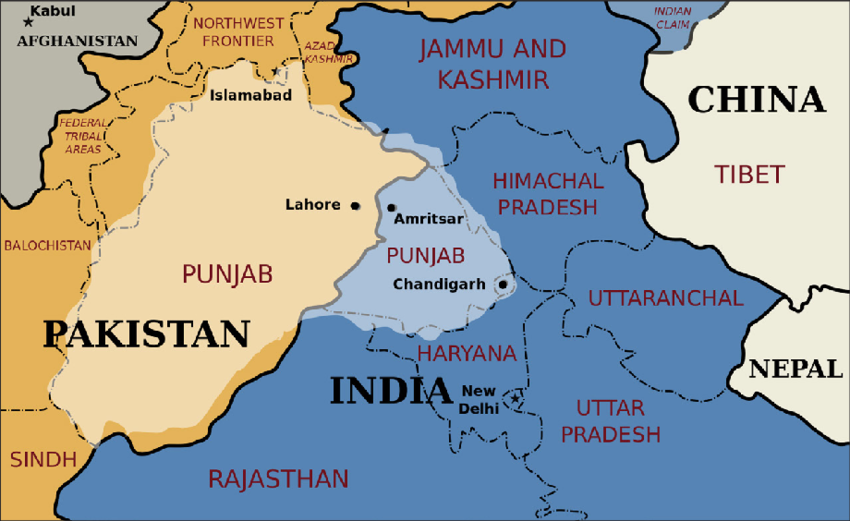
Today, there are about 25 million Sikhs. To put that in perspective, there are about 15 million Jews and 2.4 billion Christians. Sikhs live on both sides of the border but mostly in India. Some Sikhs have called for the creation of an independent state, but others believe Sikh dogma teaches it shouldn’t matter who lives where — we are all equal and we should live together in peace. Hurray for that.

As for Amritsar, it’s very gritty and a lot of people are living on the margin. Tuk-tuks, motor bikes, hand-drawn carts, and rickshaws scuttle in and out of the narrow alleyways around the temple. The shops sell food, clothes, jewelry, and spices and apparently no western junk food. No meat, alcohol or cigarettes either because they are prohibited in the area near the temple. This is the first time that I, as a vegetarian, can eat anything on every menu in every restaurant! (If you visit, don’t forget to try an onion kulcha!)

What makes it all magic is the live music coming from the temple. Called “Gurbani Kirtan,” the soothing chanting with tabla and harmonium is piped through loudspeakers on every corner in the center of town from 4am to 10pm. Have you ever been in a city that does this?
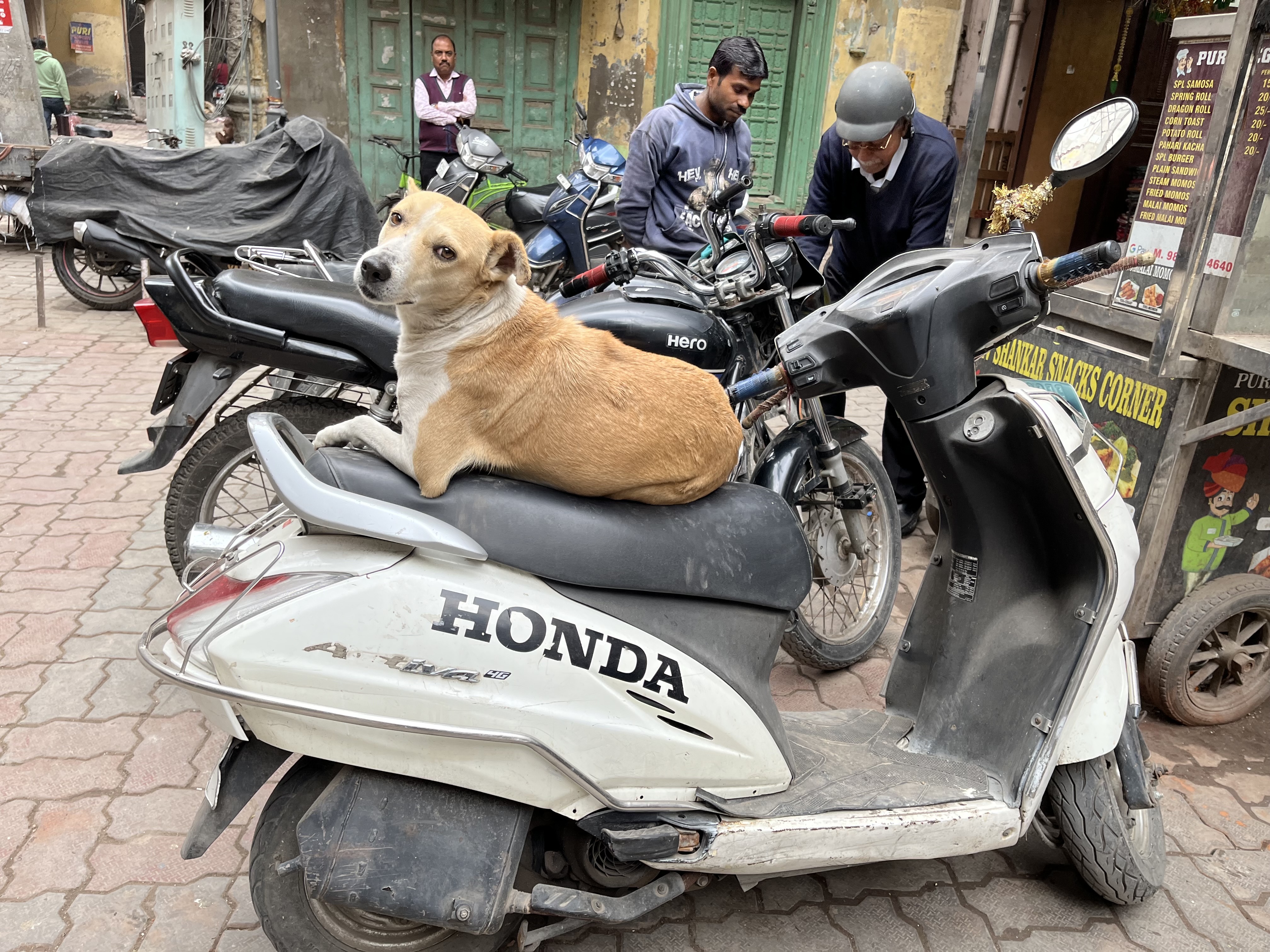
As you can imagine, all this humanity and equality is good news for the many street dogs. They sleep on their backs in the middle of the walkways. They use parked motorbikes and tuk-tuks as beds. They get as much curry as they can eat. Not warriors, but a part of the Sikh family.
 Camino Milagro
Everybody needs Miss 8th-Year Kims! Otherwise, how would we know?!
I’m fairly familiar with Sikhs as there’s a large migration in Canada, mainly in Vancouver and Toronto. Most taxi drivers are Sikhs, and then the very rich who live in humongous mansions… and lots of Sikh markets and restaurants…
Cheers,
C
Yes, we have a large community of Sikhs in the Bay Area as well. Apparently there is a large diaspora
This is very interesting, I didn’t know much of this history. I appreciate the clear explanation.
Thank you 🙂
Amritsar is a remarkable place isn’t it. It’s temple, the history, but mostly the people. Did you go to the border ceremony? Maggie
Yes I went to the border but not yet for the ceremony. Yesterday, I walked into Pakistan at Wagah. That was interesting!
When we see each other this summer in SMA, I would love to compare notes on travel planning! I am loving the route you’ve taken!
For sure! I just arrived in Pakistan and I’m a little disoriented!
When we see each other this summer in SMA, I would love to compare notes on travel planning! I am loving the route you’ve taken!
Great history lesson Kim, although I would delight in quibbling with you on some of the details. Lots of new rabbit holes for me to jump into iso thanks for that once again!
I’ve known several Sikhs “a bit” through my work and they appeared to me to be about as diversified a people as any others so I appreciate you staying clear of most generalizations regarding their perspectives and lifestyles. We can talk about this when we chat… hopefully someday soon.
I am happy for you that you are in “vegetarian heaven”. And I’m glad the street dogs have a decent life.
This seems to be one of your best journeys ever! Yay!!!!
Great history lesson Kim, although I would delight in quibbling with you on some of the details. Lots of new rabbit holes for me to jump into iso thanks for that once again!
I’ve known several Sikhs “a bit” through my work and they appeared to me to be about as diversified a people as any others so I appreciate you staying clear of most generalizations regarding their perspectives and lifestyles. We can talk about this when we chat… hopefully someday soon.
I am happy for you that you are in “vegetarian heaven”. And I’m glad the street dogs have a decent life.
This seems to be one of your best journeys ever! Yay!!!!
Yes, I don’t have much space for details and I defer to your knowledge!
Thanks for this informative and interesting post, Kim. I was not aware that their homeland in the Punjab was also caught up in the creation of Pakistan.
Thanks Rosaliene!