Author: klmalcolm2014

Unknown's avatar

About klmalcolm2014

Retired from work in government and nonprofit organizations, I've been traveling the world nonstop since 2016, writing and supporting humanitarian work. Life is good!

Bitter Oranges

The Old Jewish Quarter in Granada, Spain, is full of wonderful murals. I saw dozens of them today on a walking tour with Hadrian, who has devoted the past ten years to the city’s street art. But I want to talk about orange trees. I chose a photo of a mural honoring Syrian refugees because it shows an orange tree. Orange trees line the streets of Granada and many other Andalusian cities. At this time of year, they are full of bright, heavy fruit. The original trees were brought here by either the Romans or the Muslims, depending on who you ask, and modern Spaniards love them. But, they tell you, don’t eat the oranges! They are very bitter! They will make you sick!

Continue reading

The Alhambra. Incredible but Sheesh.

The Alhambra is one of the most beautiful historic places I’ve ever visited. Overlooking the city of Granada, the site is 26 acres of gardens, fountains, and castles originally built by Muslim rulers and later adapted to suit Spanish kings. Although the site is beautifully restored and maintained, I never felt a sense of peace or mystery there. Visitors used to complain about “gypsies” hustling them outside the complex. Today, they can complain about employees hustling them inside the complex. I had to show my ticket and passport 6 times in an hour and fend off mansplaining tour guides. Visitors are required to walk along a roped off, pre-established route where you just know hidden cameras are watching. I left feeling like I’d misbehaved.

Continue reading

Aljama Mosque, Cordoba, Spain

Yesterday, I took the fast train from Madrid to Cordoba in Spain’s Andalusian south. About 1400 years ago, Muslims arrived here from the Middle East. They made beautiful Cordoba the capital of their western empire and built the Aljama Mosque as a tribute to their religious beliefs and their political power. By 1492, Ferdinand and Isabella (think Christopher Columbus) began the violent expulsion of hundreds of thousands of Muslims, as well as members of the well-established Jewish community, which had been in Spain before the birth of Jesus.

Continue reading

Lavapies, Madrid

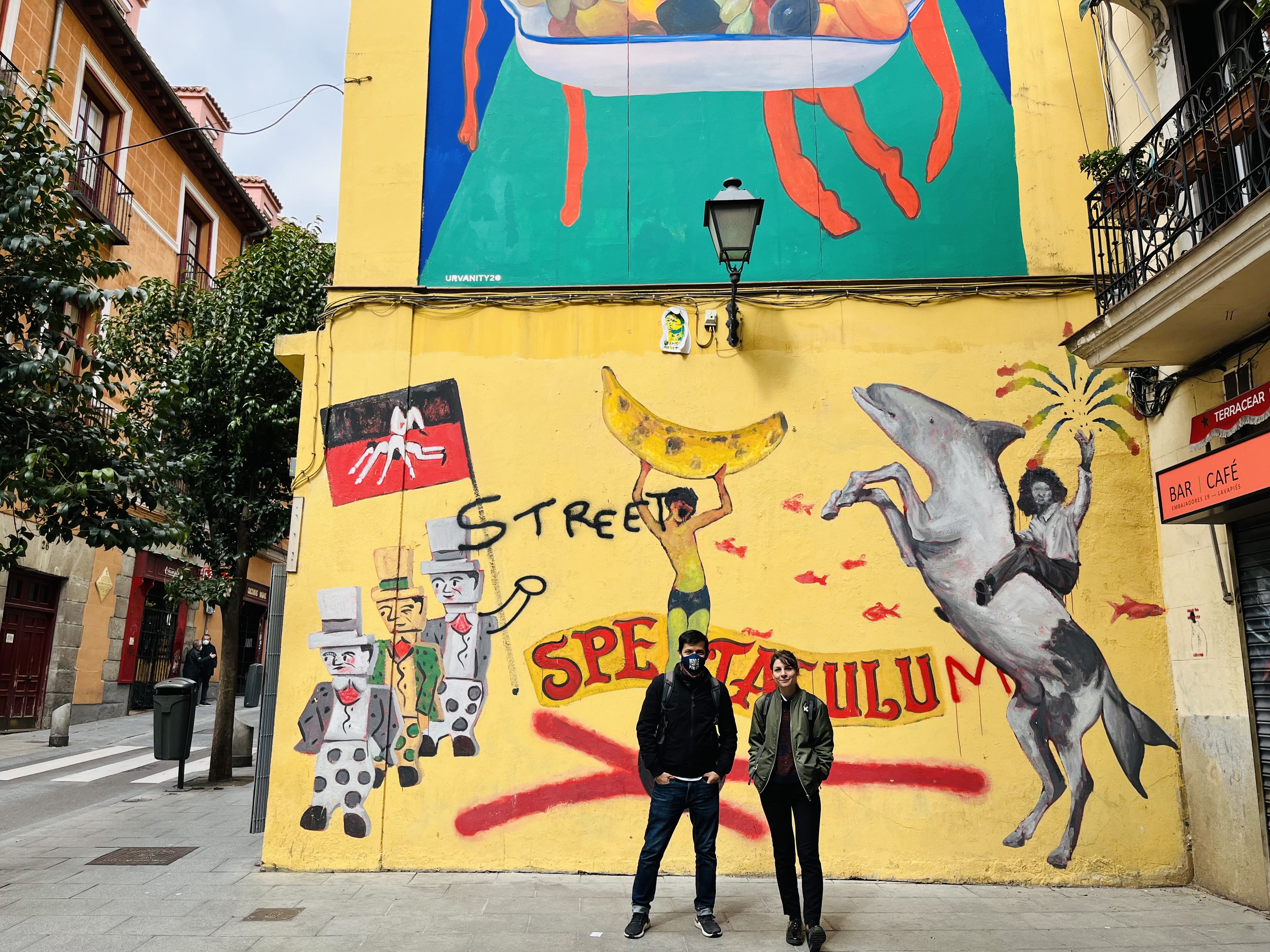
On Friday, I went on a walking tour to see the murals in the neighborhood of Lavapies with Mimi and Gerardo, both artists themselves. I loved the mural behind them for its playfulness. You can see the reference to Matisse’s dancers in the top mural. Below, the mural is taking a poke at itself: the word “Spectaculum” means a place of entertainment and refers to the way street art can gentrify a neighborhood. So far, Lavapies retains its international not-gentrified character, and is full of immigrants from all over the world with a very strong sense of community.

Continue reading

“Worldly and Nude, Freedom Against Oppression” at the Museo Reina Sofia

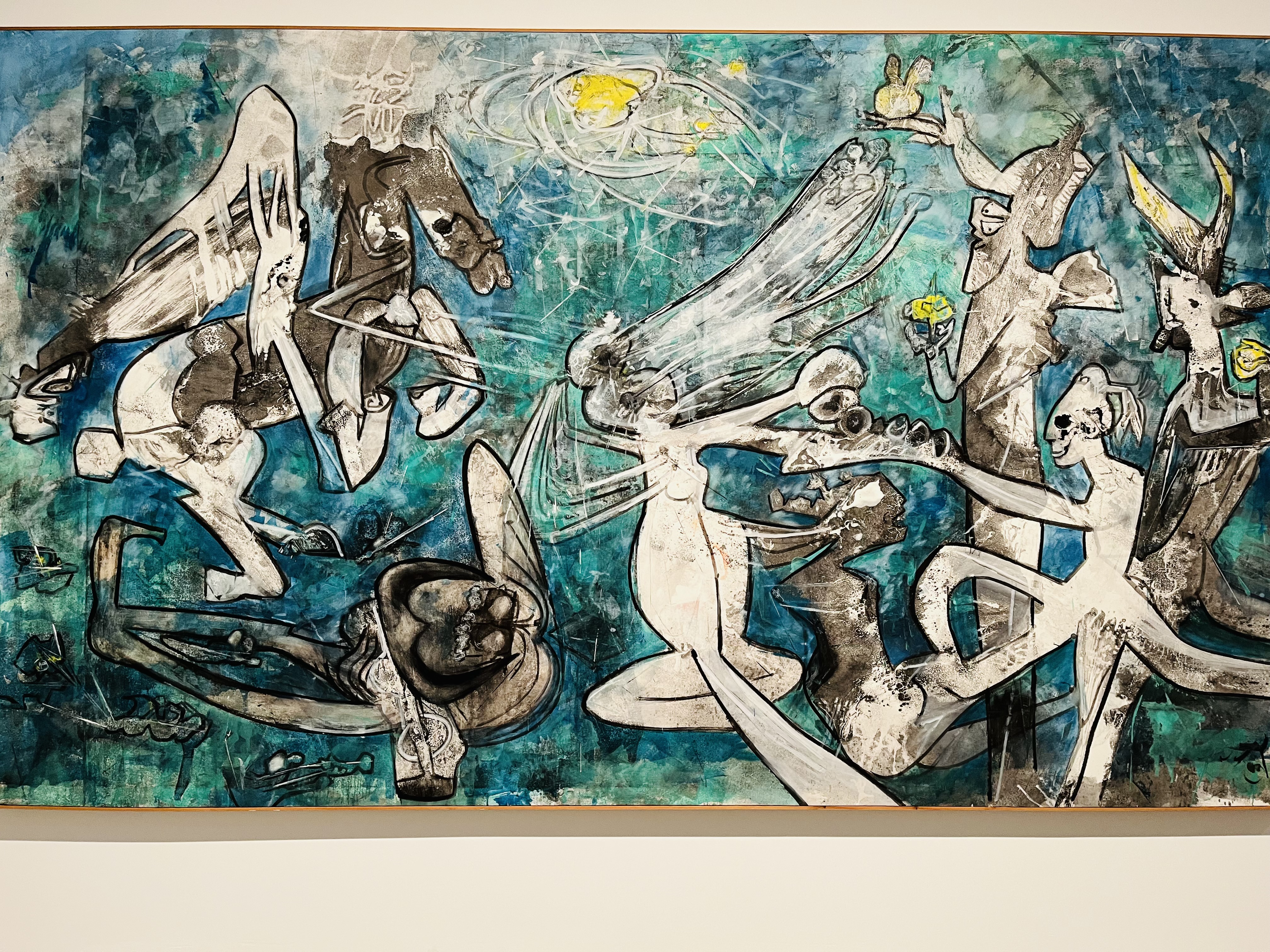
The Reina Sofia is Madrid’s modern art museum, with works by Pablo Picasso, Juan Gris, and George Braque, among many others. One of its current exhibits relates stories of the murderous oppression in Latin America during the past 100 years. You can read more about the exhibit here. https://www.theguardian.com/artanddesign/2021/jun/16/madrid-reina-sofia-latin-america-artistic-boom-enemies-of-poetry This painting by Roberto Matta appears to depict relief from the trauma of war by placing its ambiguous characters in a field of appealing colors, with a sense of balance and what appears to be a spot of sun. The painting is certainly a reference to Picasso’s “Guernica,” on display a few rooms away, which portrays only tragedy. You can read more about what inspired “Guernica” here. https://www.nationalgeographic.com/history/history-magazine/article/pablo-picasso-guernica-painting-history

Continue reading

“Las Meninas” at the Prado

So….instead of writing my usual travel postings, I’m going to post one photo a day with a a little bit of context. Today’s photo was taken in Madrid’s Prado Museum. The painting is “Las Meninas,” by Diego Velazquez. It’s a very complex portrait of a Spanish family that creates an uncertain relationship between the viewer and the figures in the painting. I loved it even more after seeing the many ways Picasso deconstructed it in paintings that are exhibited in Barcelona. You can learn more about them here https://kimmie53.com/2020/03/07/catalunyas-many-free-spirits/#more-13292 or here https://www.infobae.com/cultura/2020/10/07/la-belleza-del-dia-las-meninas-de-pablo-picasso/.

Continue reading

Tar Baby and the Stickiness of Story Telling

I’ve been re-reading Toni Morrison’s Tar Baby, and it is as mysterious to me now as it was 40 years ago. Morrison always makes you work. She prefers metaphor to clarity — why did Son hide in the closet for three days? She is a little disdainful of me — why is she so obviously withholding clues about why Michael won’t visit his parents? Morrison wants you to consider some hard questions, but she isn’t going to answer them for you or to make it easy for you to answer them yourself. For your effort, however, she offers wisdom — not necessarily hers, which is abundant, but your own. I mention all of this because I think I got a little bit of wisdom from Tar Baby.

Continue reading

Bird Box

If you are a Norteno living in San Miguel de Allende, you either know Susan Page or you will at some point. Susan put San Miguel on the literary map when she founded the San Miguel Writer’s Conference in 2004. She and her husband, Mayer, also travel all over Mexico to collect Mexican folk art. This is the story of a wooden box I saw in one of their galleries.

Continue reading