
You might love this report or hate it, depending on your tolerance for morbid. Either way, you will probably find the Tana Toraja fascinating. About 600,000 of them live in Southern Sulawesi. Their community is close-knit, agricultural, and friendly. I recently visited them because I wanted to understand their very unusual traditions involving the dead.
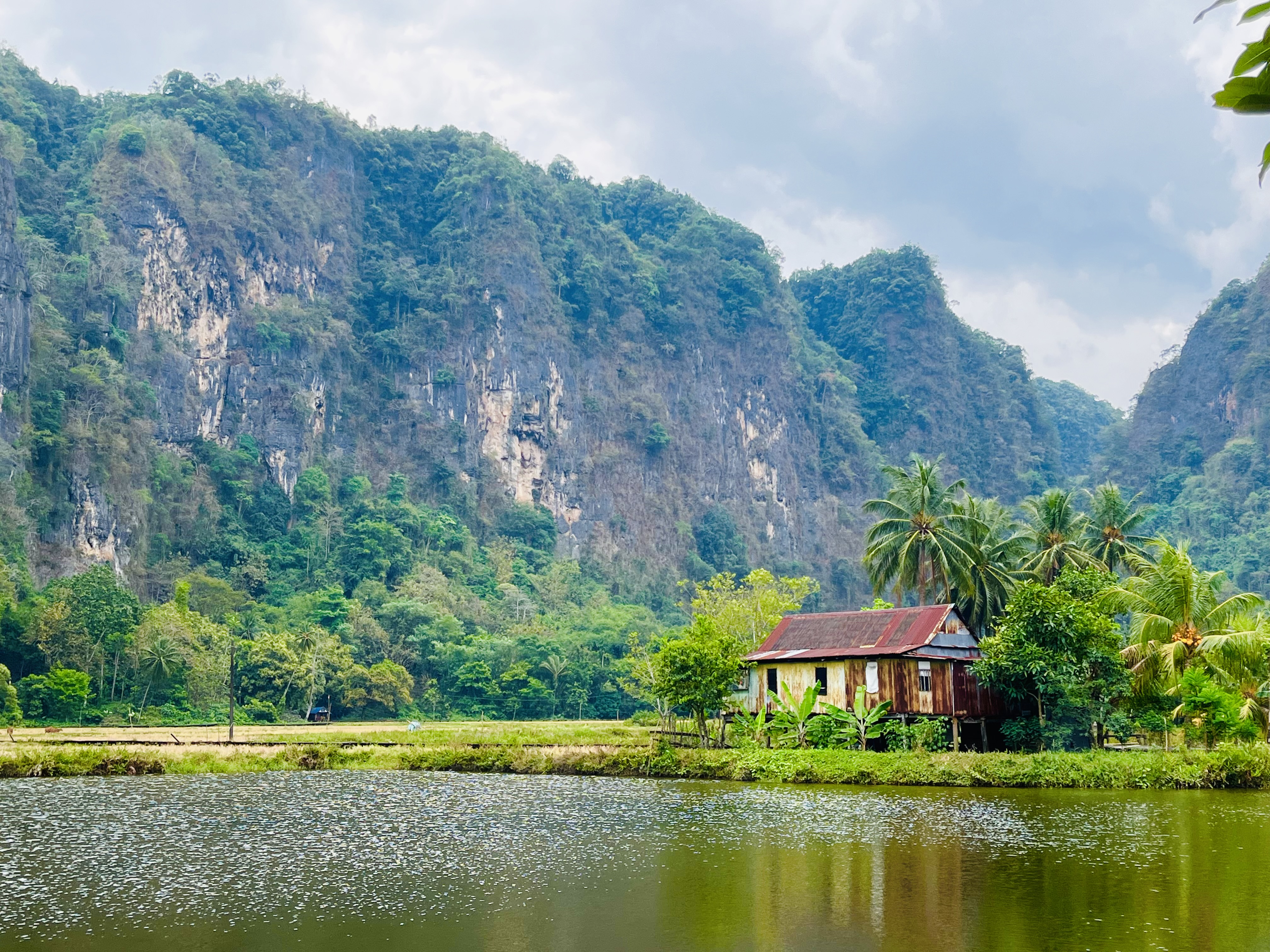
First, you might want a reminder that Sulawesi is an island and province in the country of Indonesia. It’s an easy flight from Bali to the Sulawesi city of Makassar. From there, getting to the Tana Toraja region is difficult. You can take an 8-hour night bus or fly to the small city of Palopo. Then, it’s a somewhat treacherous two-hour drive to the town of Rentepao, where you can stay in a nice guesthouse called Sulawesi Castle with its amazing owner, Sarah. And then you must drive, very slowly, for several hours into the gorgeous, hilly jungle. The roads are narrow and sometimes unpaved with some precipitous drop offs. I closed my eyes a lot.
The trip was worth it. We were lucky to have inadvertently arrived the week of some very important Toraja death rituals. As you can guess, these rituals are related to their traditional religion, which is called “Aluk To Dolo,” and means “the way of the ancestors.” Most of the Toraja are now also either Catholic or “Charismatic” (Pentecostal) and their beliefs are “syncretic,” a mixture of old and new.

The Toraja’s death traditions probably evolved from their relationship to the land. When they first settled southern Sulawesi 4,000 years ago, the Toraja needed to turn some of the jungle into farmland. Apparently worried about using up scarce farmland for buried bodies, they began burying their dead in some unorthodox places.
People with high status are buried in crypts carved into the cliffs. The doors to the crypts are adorned with beautiful effigies. These “tau tau” are considered sacred because they represent the spirits of those who are interred behind them. We also visited some caves where the dead are interred in caskets on shelves.

Babies are buried in Tarra trees, a species that has a milky sap for the babies’ nourishment. The tree crypts are believed to be a substitute for the mother’s womb so the baby can be born again. The cliffs and caves and trees are not used much any more. Now, most babies and adults are interred in more modern cement houses that line the roads all over the region. Some are buried in Christian cemetaries.

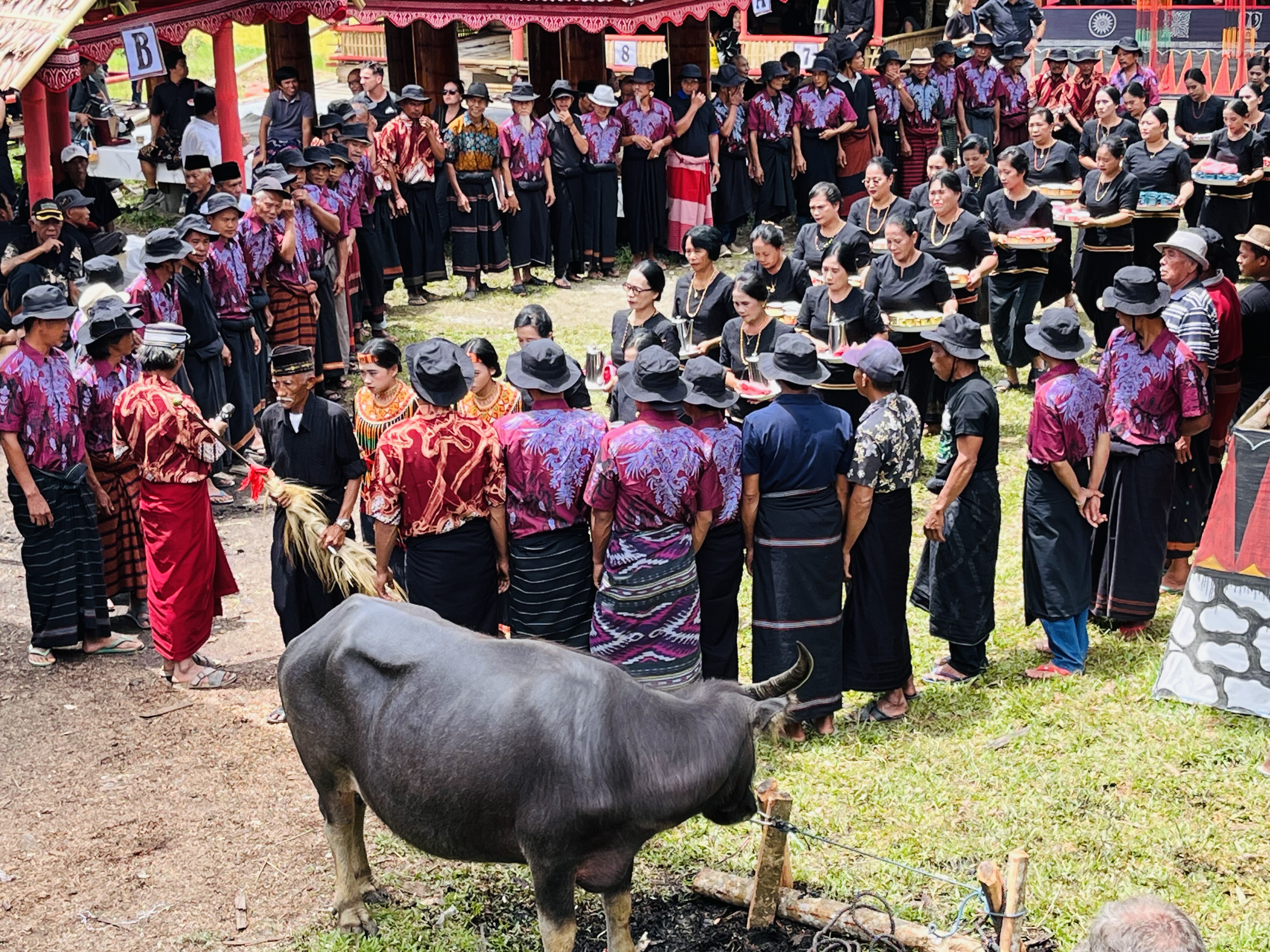
Before burying their dead, the Toraja conduct elaborate funerals where a few or hundreds of community members show up for two days of feasting, testimonials, music, and the ritual slaughter of buffalo and pigs. The wealthiest families slaughter 24 buffalos for the event, and distribute the meat to the community. We went to the funeral of an important local man. The event took years of preparation, requiring the construction of several temporary buildings. It featured several processions and traditional dancing by dozens of women and men. We left before the animal sacrifices.
Perhaps the most unusual Toraja tradition involves removing corpses from their resting places to re-dress them and clean their coffins. We were lucky to have been in the area for this rare event. We saw a family cleaning the crypts housed in a giant outcropping, where young men scaled bamboo poles to clean the areas around the bodies.

We visited another family removing bodies from their little burial houses to dress dead bodies in new clothes. The bodies were more than 20 years old but looked like they’d been buried only recently. The Toraja mummify the bodies using herbal solutions and, unlike the Egyptians, don’t disembowel them. The bodies didn’t smell and showed very few signs of deterioration.

Caring for dead bodies is believed to protect the living and dead from danger, as the person’s spirit slowly transitions to the afterlife.

At the same event, the family took advantage of the small crowd to turn the burial house around so that it didn’t face directly on to the road.

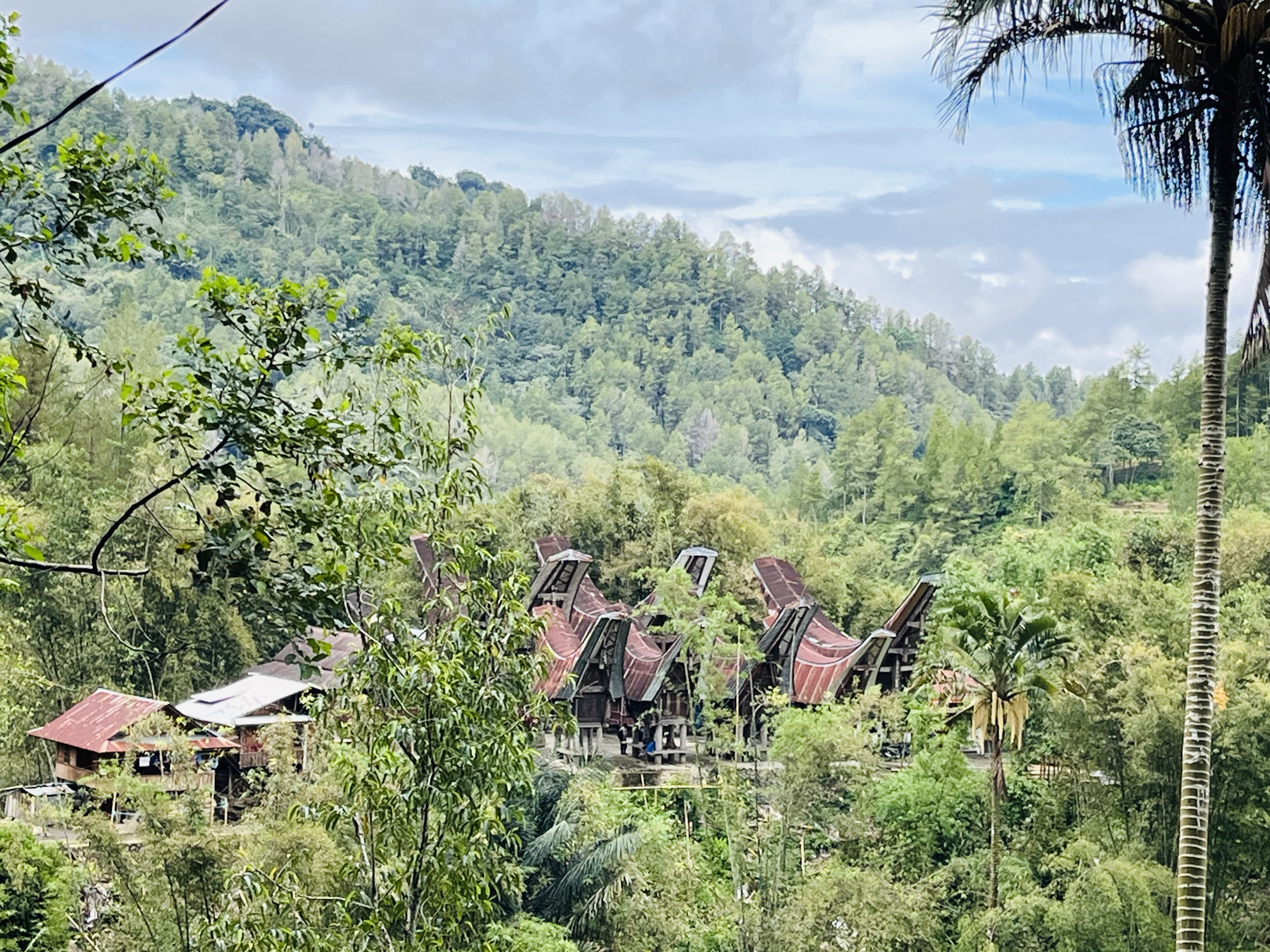
In addition to the death traditions, the Toraja also have some very distinctive architecture. Their houses and rice storage buildings are designed to look like the boats that brought their ancestors to Sulawesi. The buildings are somehow unsettling to me except for the beautiful carved designs in the wood panels.

The Toraja people were very friendly and seemed eager to share their traditions. They also make a point to keep the land and property immaculate. I didn’t see a piece of plastic or a scrap of paper anywhere.
Tana Toraja is one of the most unusual communities I’ve visited and it left a huge impression.
But please, just cremate me.

 Camino Milagro
Thank you for these wonderful pictures. I attended a reburial in Tana Toraja in 1988, with a deteriorating, cheap point-n-click camera, so I appreciate being able to revisit my journey through your pictures.
During subsequent travels I often remember a question put to me by a young Torajan man: “Do visitors attend funerals in your country?” His question initially created the visual of a non-Christian tour group sitting in the hard pews of my grandmother’s tiny church in Haskell, Oklahoma, cooling themselves with the complimentary fans stamped with the name of the local funeral home. But the lingering truth of his question is, of course, a reminder that when I experience other people’s religious events (weddings, funerals, prayers) as a traveler, the participants are experiencing them spiritually and socially. Thanks for rekindling that as I head out on another trip soon.
And as a bonus on my long-ago trip, I asked a man in the lobby of the Makassar Golden Hotel in Ujungpandang (as Makassar was then called) if he knew where to buy a bus ticket to the Tana Toraja area of Sulawesi. He didn’t, but 37 years later we are planning yet another trip to another new-to-us place in a few weeks.
Wow, your first visit was a long time ago! Enjoy this next trip and if you are in Rentapao, consider Sulawesi Castle as your home base. Sarah is amazing and she is surely the best cook in the whole province!
aloha amiga,
wow great post to a place I’ve never heard of!! Are you still planning to be around in Nov? As I mentioned, my family and I are doing a house swap from Nov 16-21 and hope to hang out. I’ll be Sayulita before that with friends and may come in early.
Peace,
Karen Hester Immigration Activist karen@hesternet.net 510-654-6346 WhatsApp +15106546346
>
Yes, I’ll be here! You’re on my calendar xoxox
Amazing description of some fascinating customs, Kim. Thanks for sharing your adventure with us. I guess I have always preferred cremation also, but lately I am thinking that the quantity of energy and resources involved bears consideration. Perhaps the best might be to leave one’s body to medical science, for the education and training of med students. But that requires geographic proximity to a university hospital, which is not my situation right now. Anyway, keep on traveling and writing, you…!
Ah yes, I’ve been reminded that cremation is maybe not the most ecological way to go….throw me to the sharks?
Well, as you know I’m a big fan of your blog.
But this is the single most interesting of your posts (for me) ever!
Your pictures (always underrated by you) and your narrative (A+) here are especially informative and well written in this piece.
I could go on babbling, but I’ll just say “Wow!” and “Thanks!” and move on.
(Regardless, I still wanna’ be planted right by my family in NY).
It was an amazing adventure!
Very Unique Tradition and believe, thank you for explaining about Tana Toraja death ritual.🌺
I learn from the best 🙂