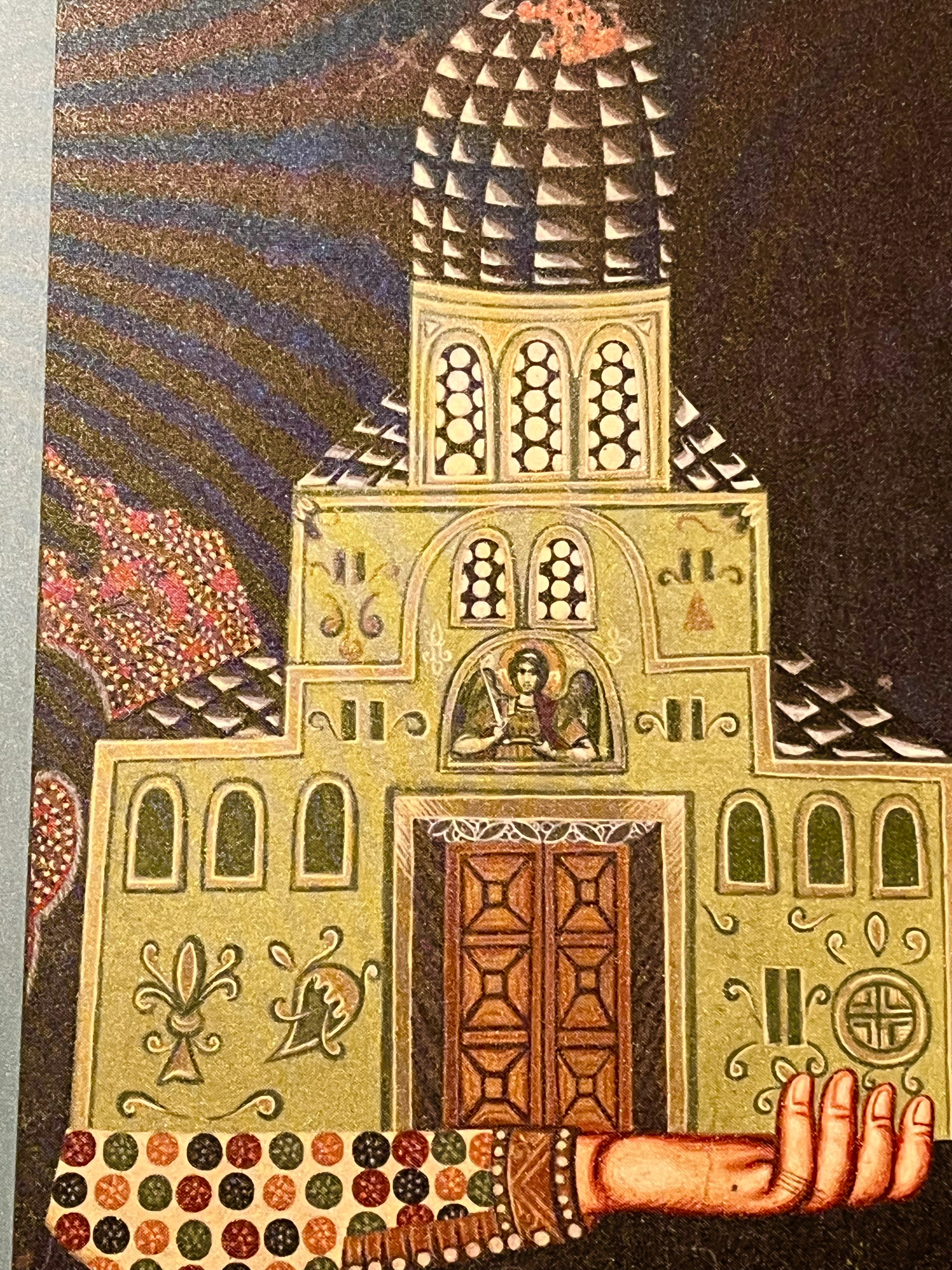
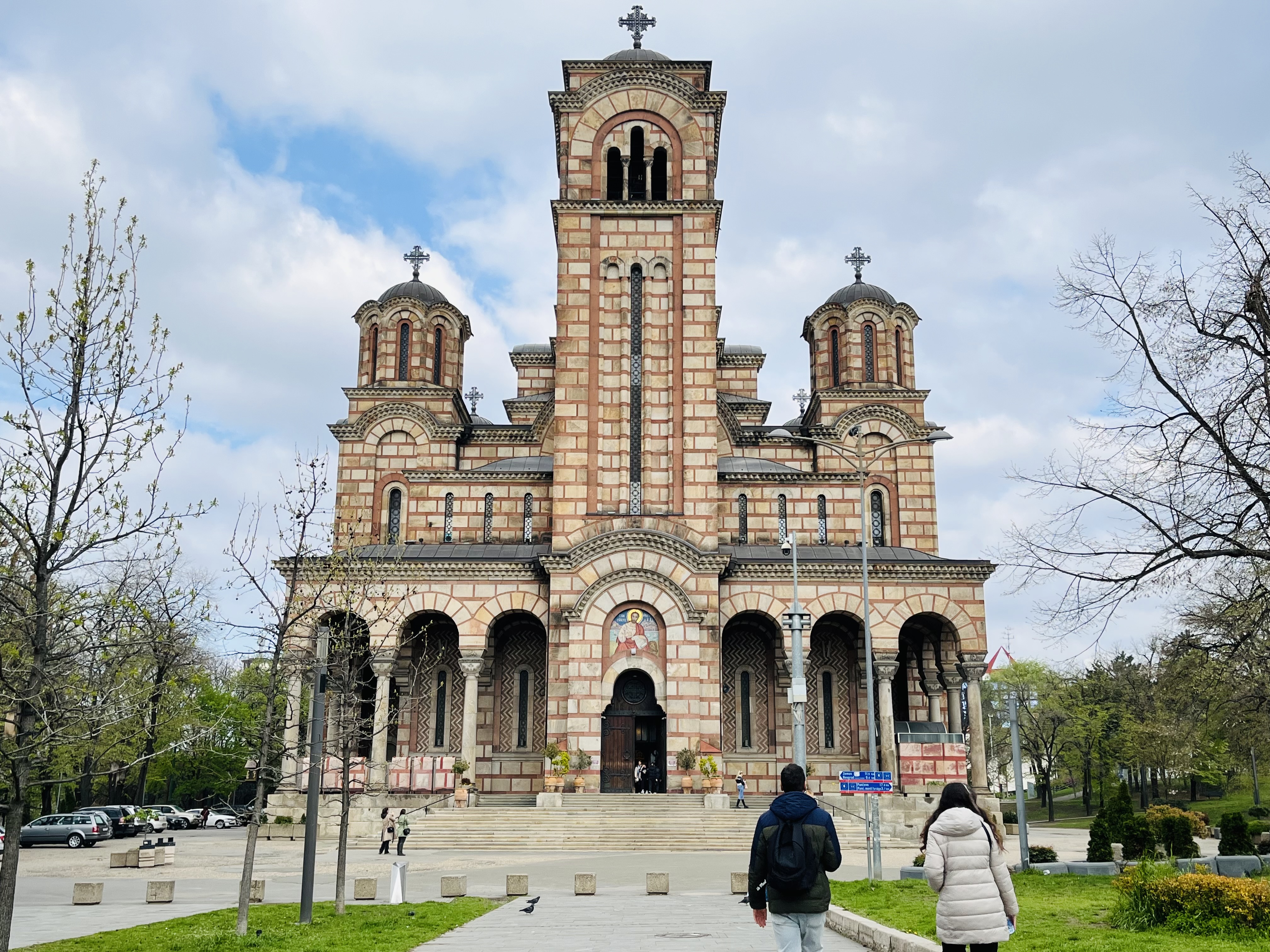
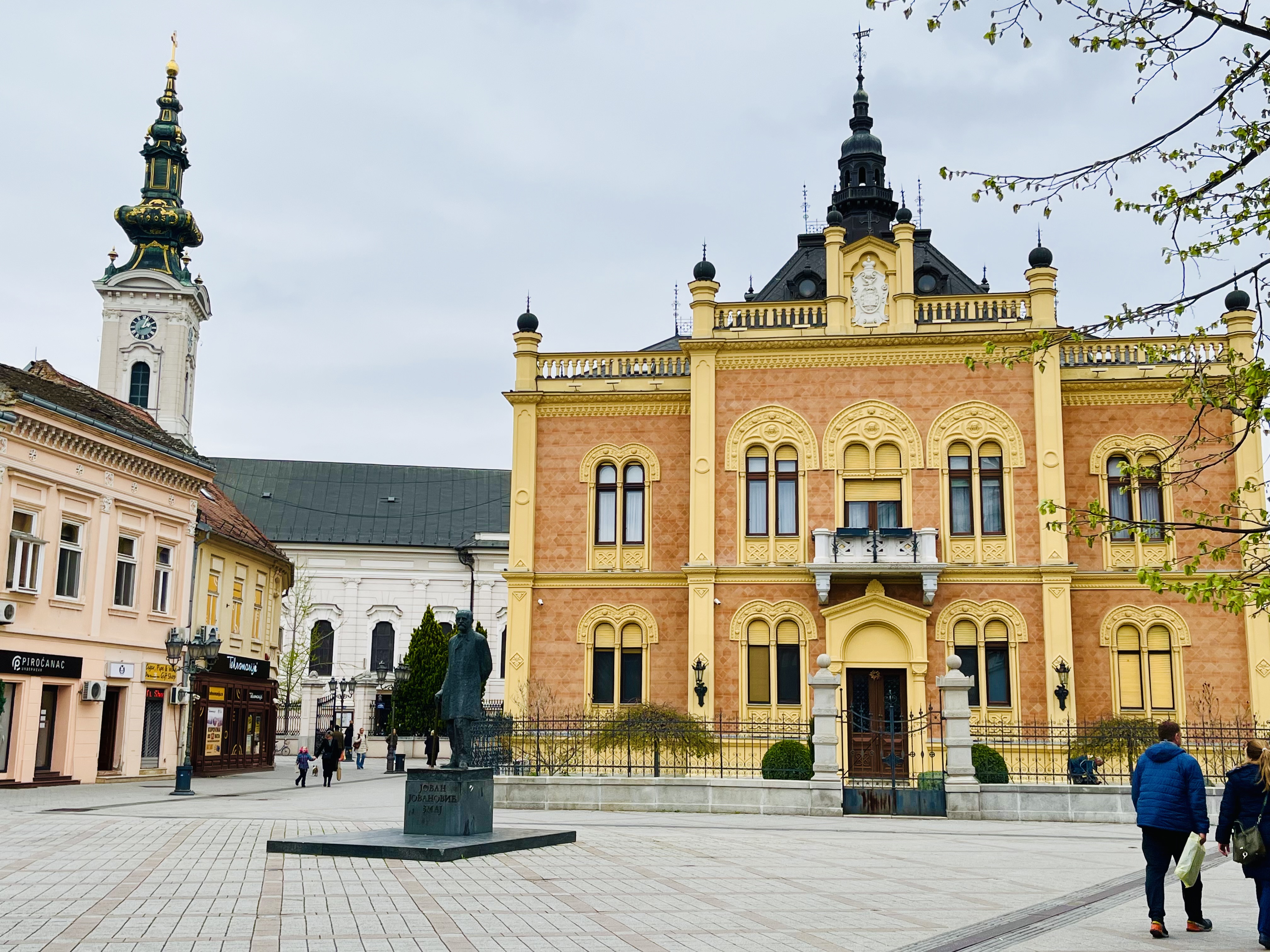
For the past week, I’ve been in Belgrade, the capital of Serbia. The city has great museums, a million trees, parks, walkable neighborhoods, and gorgeous old churches. This part of the Balkan Peninsula also has an almost unimaginably complicated political history. Until 2003, Serbia was Yugoslavia, which is now six independent states — Serbia, Slovenia, Croatia, North Macedonia, Bosnia and Herzegovina, and Montenegro. Depending on your politics, Kosovo is either an independent nation, or part of Serbia (most of the world says it’s part of Serbia). This is not the most complicated part of the history of this part of the Balkans.

Here’s a very short version of the region’s modern history (and don’t take my word for it.) First, the Ottoman Empire ruled this part of the Balkan Peninsula for almost 400 years, which is important to know because Albania, Bosnia and Herzegovina, and Kosovo are majority Muslim countries in a region that is otherwise mostly Christian. When the Ottoman Empire left in the late 1800s, Serbia became an independent state until 1945, when the six (seven?) countries were united under General Josip Broz Tito to form Yugoslavia. Tito was a sort of benevolent socialist dictator from 1945 until he died in 1980.
During his rule, Tito was able to maintain peace between the various religious and ethnic groups, including Catholics, Muslims, Eastern Orthodox Christians, Roma, and Jews. After Tito died, old tensions flared and the region experienced a series of wars for independence under the cruel leadership of Slobodon Milosevic (later convicted as a war criminal). These wars culminated in the NATO bombing of Serbia for its treatment of Albanian separatists in Kosovo. Yugoslavia officially dissolved as a federated nation in 2003 and Serbia again became an independent state. (Good friend Judith Jenya may have something to say about how I’m describing all of this — she was there uniting children of war in summer camps.)
These days, Belgrade is relatively prosperous and the people here seem relaxed and friendly. They drink a lot of coffee and beer in sidewalk cafes, and enjoy free education and universal health care. (I had the privilege of visiting an eye clinic one night after a contact lens lodged itself somewhere on a path to my brain. A doctor saw me immediately, took care of my problem in five minutes, and gave me anti-biotic cream — for no charge.)

But there is trouble here right now. In November last year, the train station in nearby Novi Sad collapsed, killing 15 people. This tragedy was apparently related to government corruption, setting off years of public resentment and distrust, and triggering months of demonstrations. On March 15, the nation held a giant protest that resulted in the resignation of Serbia’s prime minister.
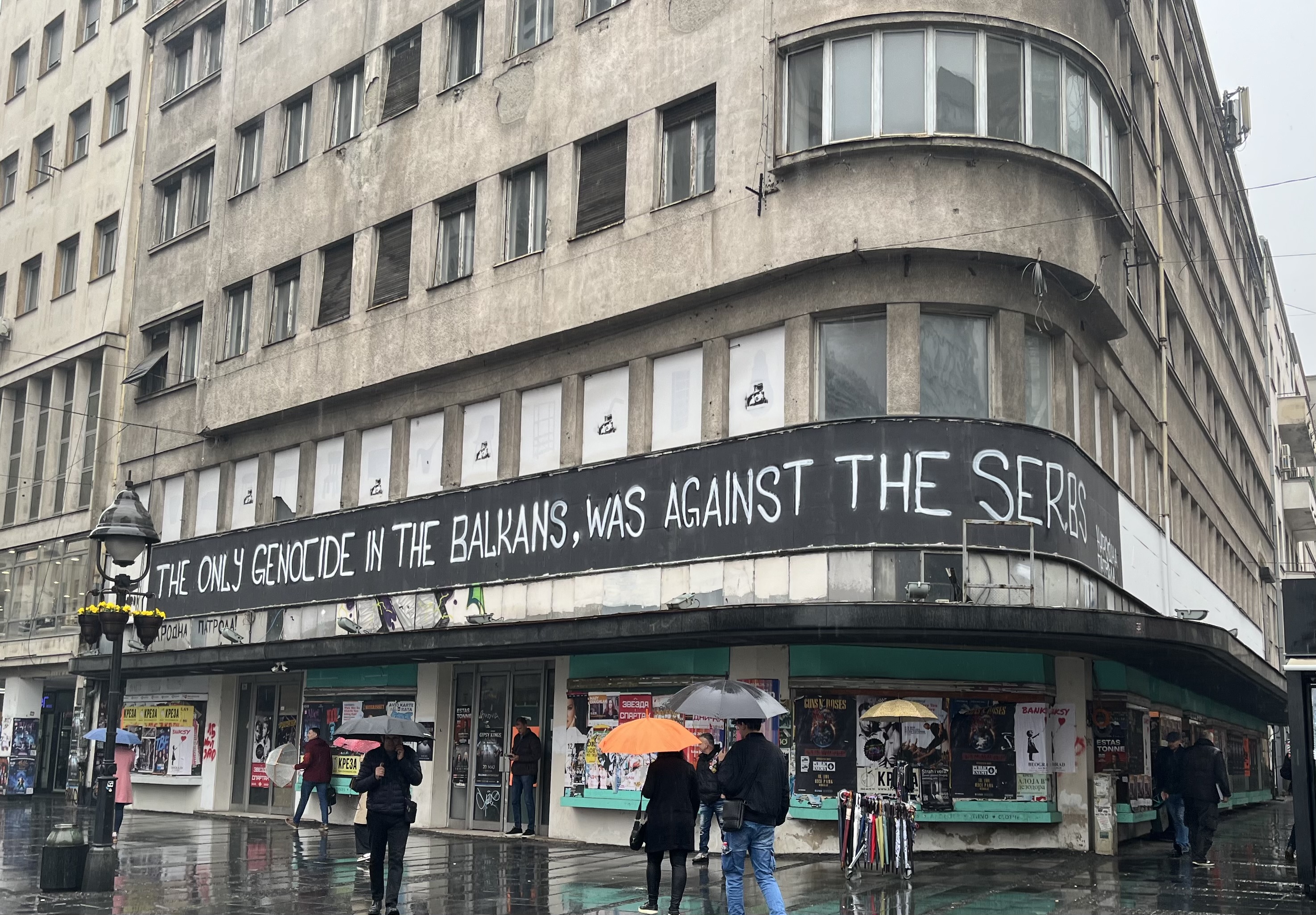
This might have been hopeful, but the sitting president has accused protestors of being a front for international agitators. The locals I’ve spoken with don’t think much will change with the remaining government and are committed to more activism.

So while I am enjoying Belgrade’s cafes, and street art, and pedestrian malls, I am thinking “power to the people.” Serbia’s fight for social justice should empower all of us and is a fight for social justice everywhere.

 Camino Milagro
I’m glad you were in a country with a good, humane medical system! I’d love to know how and why the borders of these ex-Yugoslavia countries came to be.
Cheers!
C
Yes, I would like to know too! Maybe I’ll check that out.
Good piece to understand the region and its politics of which I have only a vague understanding. Maggie
Yes, I think if I had more time to spend in other of the nine countries, I could understand more.
Kim, thanks for sharing a little of the complicated history of this region. It’s amazing that you were able to get emergency treatment for your eye…and at no charge!
Yes, I’ve had good experiences in several other countries for minor health issues or false alarms.
Complicated indeed! You did a really good job summarizing it. I don’t think one can understand what’s going on in a place today without a decent background in what the peoples of an area have experienced and what has been taught to succeeding generations. Here’s what I think I know, and I’m wide open to learn more about present day attitudes and have my understanding of the past updated and improved so comments are welcome.
My knowledge of Serbia is very much based on its role in catalyzing the disastrous First World War. The Balkans were known as the “powder keg of Europe” due to the many overlapping claims to territories and spheres of influence between the major European powers, as well as the growth of nationalism in the region and the many “small” wars that took place in the Balkans prior to the massive conflagration of World War One. In 1914, while part of the Hapsburg Austro-Hungarian Empire, Serbian government civil and military officials in Bosnia-Herzogovenia secretly conspired with and armed home grown radicals (they might be called “freedom fighters” today) who similarly wanted independence from the already shaky Hapsburg Empire. They wanted to light a fire on the powder keg. These radicals managed to assassinate the heir to the Empire, the Archduke Franz Ferdinand in Sarajevo then part of the Hapsburg Empire in the Balkans .
The assassination triggered a massive catastrophic war among all the major nations of Europe already prepped for conflict by an uncontrolled arms race and interlocking treaty obligations which had arisen the first 15 years of the 20th century.
After the assassination these alliances between nations sort of went into “automatic mode” as one after another declared are upon each as their interlocking treaty obligations required. It was like dominos falling… all expecting a violent but short localized conflict. Of course what emerged was the lengthy horrific worldwide conflict from 1914-18 with millions killed, the most deadly war the world had seen up to that time.
Serbians were blamed by much of the world for the entirety of World War One (quite wrongly IMO). They suffered terribly during the conflict and their nationalist ambitions and dreams of complete independence in the end were thwarted. The winners of the First World War devised the Treaty of Versailles (which formally ended the war) which “magically” created new nation/states out of whole cloth in the Balkans (and the Middle East). The consequences of those decisions reverberate to this day in both areas much to our dismay.
Instead of independence, Serbia was made part of a new nation eventually called “Yugoslavia” composed of many small former Balkan nation/states and a populace composed of many diverse and antagonistic ethnic and religious groups. Serbia stayed part of Yugoslavia through and beyond the Second World War due in large part to Tito’s deft political skills. A decade after Tito’s death Yugoslavia split apart and disintegrated in the ’90’s following horrific civil wars and episodes of unthinkable ethnic cleansings.
All these Balkan peoples live in lands whose legacy includes blood on the hands of their ancestors. Although I fear their ancient hatreds remain not far below the surface, I fervently hope that today’s generations can learn from the past in order to live together in peace and harmony. I wonder what will transpire now that “populism” and authoritarian rule are flourishing worldwide? I’m not optimistic.
Anyhow, I apologize for rambling a bit, but it’s an area of the world which has puzzled and intrigued me for years.
Thanks for filling in a lot of blanks! It’s an interesting part of the world for sure!
Terrific essay. Human history is so incredibly complicated. So much instability and warfare over the millennia.
Yes, I don’t get it!