
Yesterday, I visited Transnistria, a country in the middle of Moldova. At least, it acts like a country. It has a border patrol, a military, a government bureaucracy, and currency. It calls itself a country. And actually, it no longer calls itself “Transnistria” because its leader directed residents to use its Russian name, “Pridnistrovie.” This is one of the most complicated cases of national identity I’ve ever heard of, or actually never heard of.
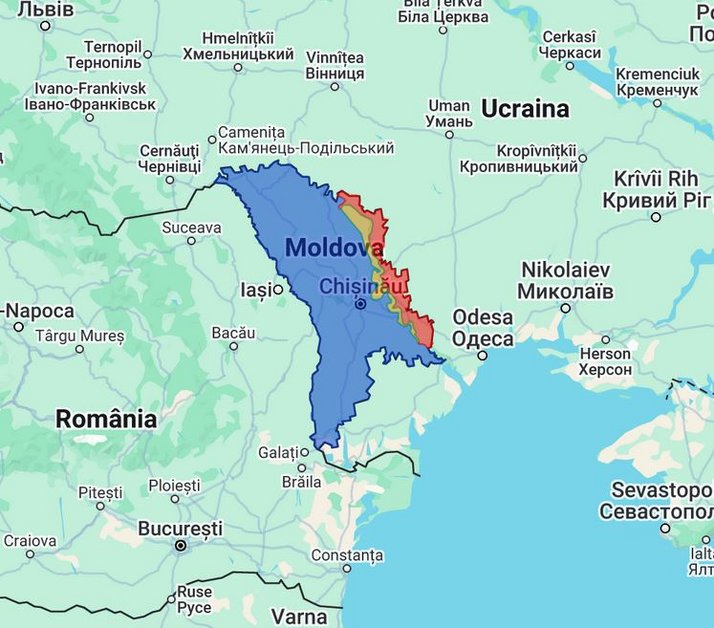
Transnistria declared itself independent from Moldova with the break up of the Soviet Union in 1990, apparently because most of its residents are Russian. Most of the world does not recognize Transnistria as an independent nation, especially Moldova, which seems to be worried that the region could be annexed to Russia.
Officially, Russia doesn’t recognize Transnistria as independent either, although it’s obviously all in for Transnistria. Russia subsidizes Transnistria’s health care, military, education and energy purchases. Also, most Transnistrians speak Russian as a first language and Soviet symbolism is everywhere.
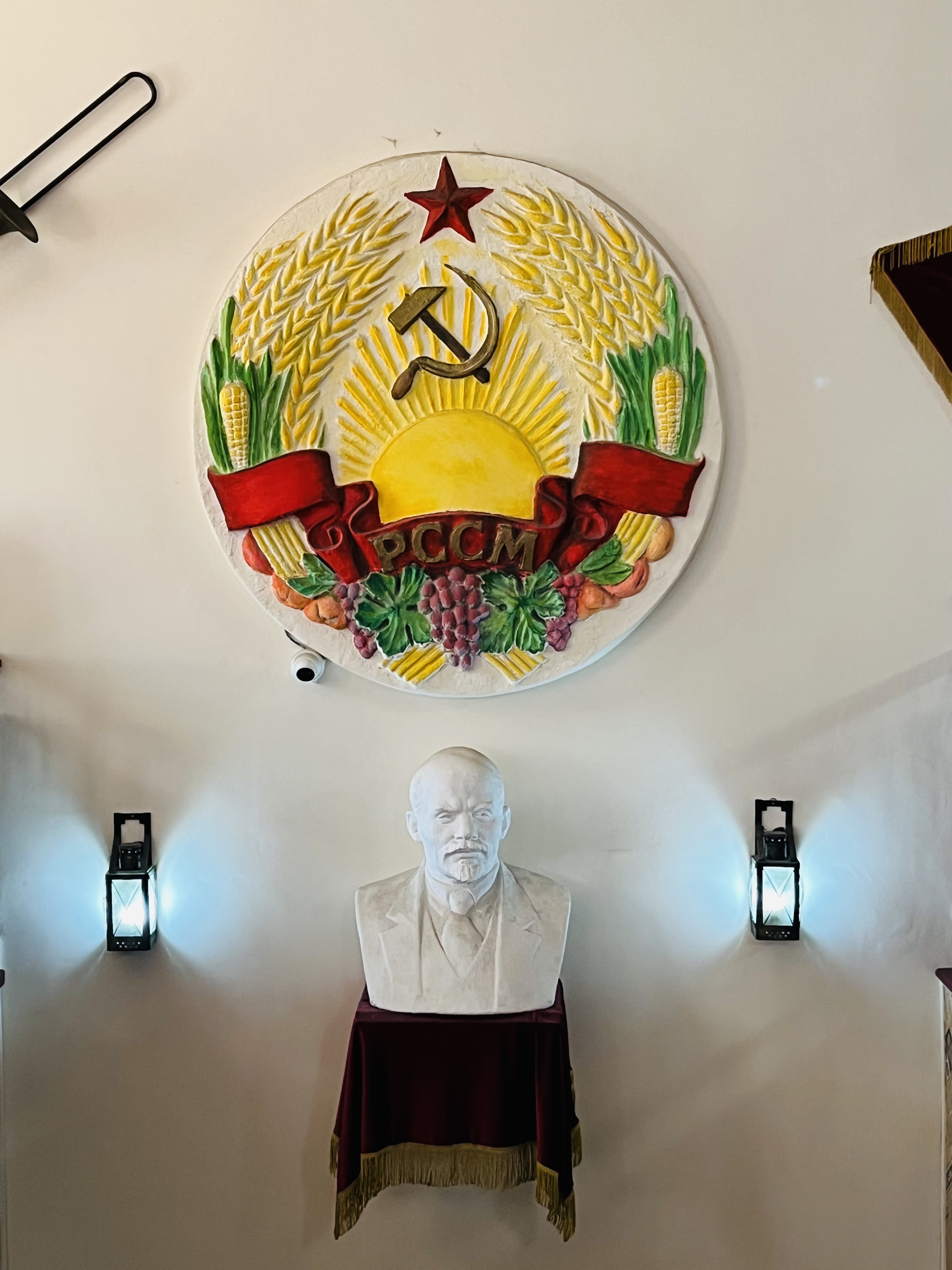
And check out the Transnistrian flag! Even Russia ditched the hammer and sickle. (Transnistria car licenses include a picture of the flag but without the hammer and sickle, because the European Union won’t permit cars with that symbol to enter into EU countries. You can’t make this stuff up!)

Russia’s association with Transnistria seems like a continuation of its pre-1990 relationship in the region but Russia certainly wasn’t the first one and probably won’t be the last. Like so much of Europe, the region has been occupied by many outsiders, including Goths, Tatars, Huns, the Ottoman Empire, and Byzantines. Even Denmark’s King Charles had a moment there. Ukraine has threatened Transnistria as well. And now, Moldova has a plan to re-integrate Transnistria to make it part of Moldova, which is so far supported by the new leadership of Transnistria, but reportedly not by a majority of Transnistrians. You have to wonder how all of this will play out in light of the evolving relationship between Russia and the US.

I learned this background about Transnistria on a tour that was joined by two young men from Amsterdam and one young man from Italy. They all spoke 4 or 5 languages, as did our tour guide, Anna. I told the young Italian man that, being American, I only know un poquito espanol. I think he has a girlfriend because, when I suggested he invite lovely Anna to dinner, he responded, “Lo que pasa aqui, se queda aqui.”
While I was still laughing at young Italian man who shall remain anonymous, Yuri from Amsterdam found a mural of his namesake — Russia’s first astronaut, Yuri Gargarin.

What an interesting world….
 Camino Milagro
Definitely one of the weirdest things I’ve ever heard about!
Nation-States are an artificial creation of our flawed species which have dominated human organization of societies for many millennia. Their creation was the result of avarice and their presence has led to many thousands of conflicts and millions upon millions of violent deaths. I see no end to this method of organization nor a clear pathway to humanity finally recognizing we are all fellow-travelers on one single Spaceship Earth. Sigh….
We’re screwed.
BTW, I wonder if and when tRump declares he wants Transnistria to become our 52nd or 53rd state?
I think he’ll “give” it to Russia!
Until you mentioned it in your last post, I had never heard of “Transnistria.” What a complex situation of national identity! It also sounds like a volatile political situation. Oh, the places you dare to tread, Kim.
Yes, I’d never heard of it either! But we’re always safe with a tour guide….
You are amazing! Wonderful pictures and dialog. Be safe and stay healthy.
Thanks Sher (I think this is Sher right?)!
Kim, I wonder how you found this place! You have uncovered the possibility of returning to a medieval kind of living…
C
LOL. I read a lot of blogs when I travel. Often it’s the amateurs who share these kinds of off-beat destinations.
So cool that you visited this unique little place!
Yeah, I’d never even heard of it!