
I know, I know, you’re not going to North Korea! But maybe you are interested in a little about my experience there in April 2012. It was the week of Kim Jung Un’s investiture as Supreme Leader, with celebrations and military parades. It was an incredible learning experience and, as usual, there is more to the story than we get from politicians and mainstream media.
A few caveats….some things have surely changed since my visit 12 years ago, but probably not the basics. Also, the photos are not mine. When I was there, visitors were not permitted to bring smart phones or computers into the country, so we had to use old fashioned cameras, and my paper photos are in storage. Finally, as usual, my observations are incomplete and biased, so I highly recommend you read other sources.

Here are the questions I usually get when I tell people I visited North Korea.
Can Americans go to North Korea legally? The US State Department shut down travel to North Korea in 2017. I don’t know how this squares with my understanding that the US Constitution guarantees that Americans are free to travel. When we went, the government of North Korea permitted Americans to visit only if traveling with a tour company approved by the North Korean government. Tourists were prohibited from exploring independently and the rule was narrowly interpreted, as I learned the hard way. In Pyongyang, two of us took the stairs instead of the elevator down to breakfast and we were almost arrested. No one had told us we couldn’t use the stairs. We had a nerve-wracking 20 minutes waiting for negotiations between our tour guide, Mr. Kim, and the military police. Mr. Kim prevailed.

Can visitors see real aspects of North Korean life? Yes. During our 12 day tour, we saw people in the capital of Pyongyang and in the countryside. Some of our contact with North Koreans may have been staged, at least in Pyongyang where, for example, everyone was wearing nice business attire and families were visiting a local zoo. The supermarket in the center of the city was nice, but didn’t appear to have any shoppers. We saw North Koreans in villages going to and from work, watched an incredible gymnastics performance by young children, and attended a world class symphony. We also saw North Koreans at the bowling alley! We were not permitted to talk to North Koreans except our tour guides.

What were your impressions of the government? The government was, as you might expect, very controlling. At the time, there was a feeling of enthusiasm and maybe nervousness as Kim Jung Un took power as the Supreme Leader. The culture felt almost cultish. We visited many landmarks and museums, all of them dedicated to the memory of the previous leaders, Kim Il Sung and Kim Jung Il, who are Kim Jung Un’s father and grandfather. Our North Korean tour guides almost always concluded their comments with praise for their departed leaders.
Why is North Korea so isolated and mysterious? The US tends to describe the world in terms of its foreign policy objectives, so it refers to North Korea as isolated and the “Hermit Kingdom.” It’s not a kingdom or a hermit. It has definitely been isolationist, especially where the US is concerned, but it has embassies in 24 countries and formal diplomatic relations with 44 other countries, including Italy, France and Germany. https://www.ncnk.org/resources/briefing-papers/all-briefing-papers/dprk-diplomatic-relations To the extent North Korea is an outlier, its peculiarities result from its modern history, and it’s complicated, as always. Japan occupied Korea for the 35 years before the end of World War II, and systematically tried to wipe out Korean culture and subjugate its citizens. After Japan withdrew, the US and the USSR divided Korea into two countries without the consent of the Korean people. Between 1950 and 1953, the US destroyed most of North Korea’s infrastructure during the “Korean War,” which caused the deaths of almost 5 million Koreans. Today, the US has a huge military presence on the border with South Korea and routinely conducts military exercises as a show of power. The US has also imposed a punishing embargo on North Korea, which means the country doesn’t have access to most of the world’s trade markets.
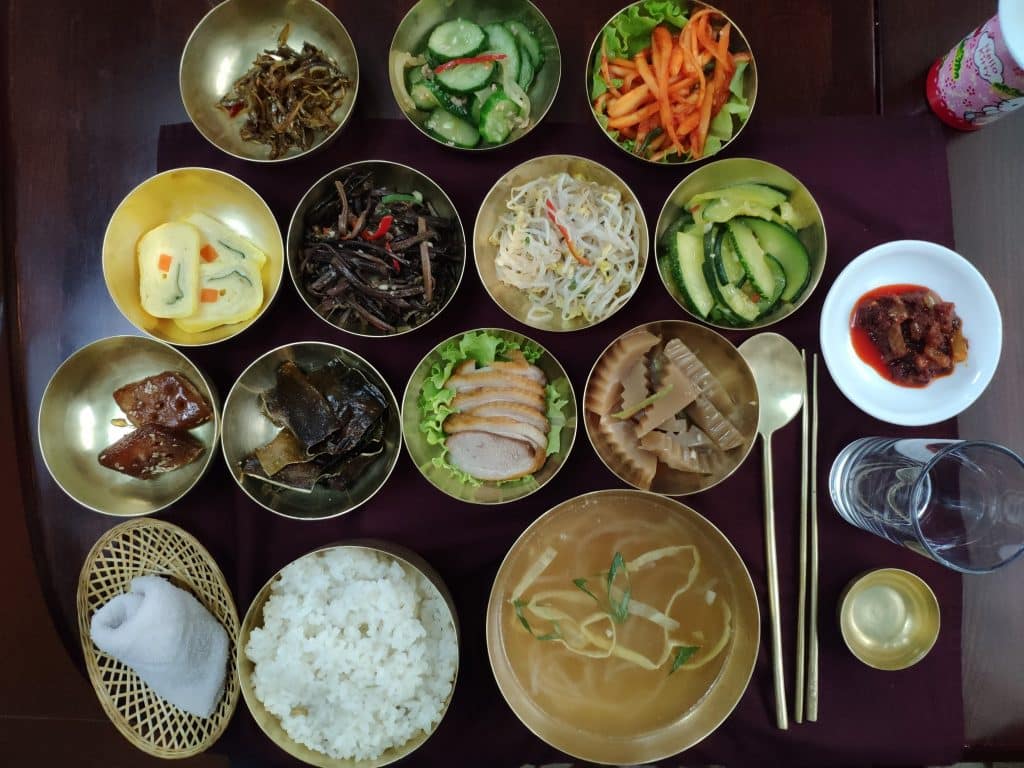
What was the food and accommodation like for tourists? Our hotels weren’t glamorous but they were very comfortable. We were served a lot of rice, kim chee, pickled vegetables, pork, and seafood. It was boring for me as a vegetarian, but I didn’t go there for the food.
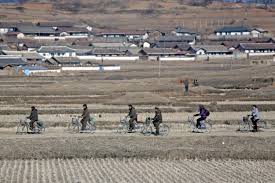
What was the countryside like? We traveled to several places outside the capital. During that time, we saw a large dam project, a small resort, and some farm villages. We were often the only vehicle on the highway. Generally, the land was somewhat desolate, and, at the time, farmland was fallow, possibly because we were before the growing season. However, we saw a lot of trees and green underbrush in the Demilitarized Zone — which has not been inhabited for 70 years.
What should I do to understand North Korea better? Even if you aren’t going there, and you probably aren’t, I highly recommend North Korea by Bruce Cumins, Nothing to Envy by Barbara Demick, The Orphan Master’s Son by Adam Johnson, and Escape from Camp 14 by Blaine Harden.
What were the most important things you learned about North Korea? The Korean people were very friendly, and our tour guides were very well-educated. We expected to see North Korea’s best face, knowing that many were suffering, and we saw evidence of that. We stayed in a countryside hotel where we could hear loudspeakers going all night from an adjacent property. We saw people digging into the roots of trees, probably for grubs. Very few people own cars or are educated, and 40% of North Koreans are undernourished, according to the United Nations. We also learned the United States is responsible for much of the hardship of the people and the country’s isolationism. For that reason especially, I was grateful that we had an opportunity to build small but meaningful bridges with a few of the North Korean members of our global family.
If you travel in hopes of understanding our crazy world, as I do, you shouldn’t miss North Korea if and when Americans are able to travel there again. In the meantime, I’d just say that North Korea isn’t crazy to North Koreans, but, to an American, it is unlike any other place I’ve visited.
“Everything is decided by a person’s thoughts and if he is ideologically motivated, there is nothing he cannot do.” ~ Kim Il-sung
 Camino Milagro
Thanks for sharing this glimpse of North Korea.
Hi Rosaliene, I think this one stands out as my least popular blog! I think we all want to hear some all-good news
Kim, I’ve made a similar observation on my blog. Yet, I persist in sharing the not-so-good news because I believe it would be detrimental to our well-being to look away.
Thanks for this insight.
🙂
Very interesting post. I knew little about N Korea until reading A Kim Jong-Il Production: The Extraordinary True Story of a Kidnapped Filmmaker, His Star Actress, and a Young Dictator’s Rise to Power, by Paul Fischer. It’s a fascinating story. Based on your recommendation, I’ve added The Orphan Master’s Son to my reading list.
I didn’t know about that book. Sounds like one I need to read!