We’re in Uzbekistan and it’s true that we are all millionaires here! That’s because a million Uzbekistan som equals about $80 US. For newcomers, doing the numbers can be tough when you are going through a wad of bills to pay for your $9 lunch. It’s a lot of zeros!

Uzbekistan is not what I expected, which is true almost everywhere I go, but some places more than others. Uzbekistan was once a member of the Soviet Union, so I expected its cities to be kind of grim. They’re not. The cities we’ve visited so far — Tashkent and Samarkand — are millionaires like everyone else because millions of trees have been planted all over the cities. It’s not a rich country but there seems to be a strong sense of community and well-being (free health care, cheap universities, government housing that is set up to promote home ownership). And Uzbeks are about the friendliest people you can imagine. Our charming tour guide, Zafar, says, “Uzbekistan has been invaded many, many times, yet we are still very friendly.”
The invaders Zafar references include Genghis Khan, Arabs, and Russia. Parts of Uzbekistan were also stops on the Silk Road, where luxury goods were moved between China and Europe for more than 1500 years. By the 15th century, traders began to use maritime routes, but parts of the Silk Road are still used as major highways. “If you have a question about Uzbekistan,” says Zafar, “the answer will probably involve the Silk Road.”

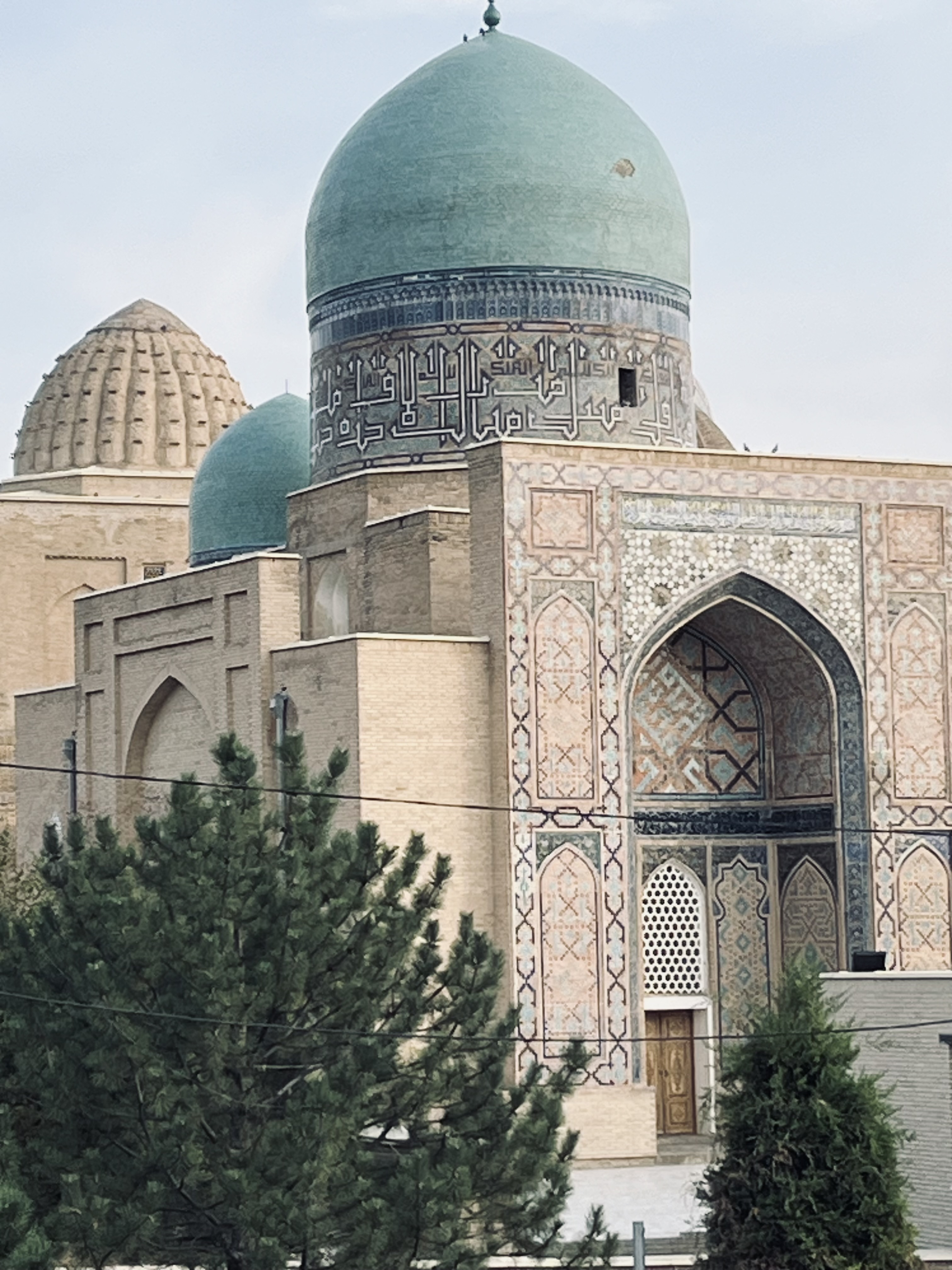
All those traders and invaders left cultural and artistic influences of all kinds, but Uzbekistan is most famous for its Arabic architecture and we’ve been able to see some of the best of it. Mostly mosques, mausoleums, and madrassahs.

In Samarkand, we visited some 3,000 year-old ruins that included a palace with elaborate murals on the interior walls.

The Arabs occupied Uzbekistan beginning in the 7th century and for long enough that the country became mostly Muslim. Some women here wear hijab (head coverings) and colorful robes that might be considered abayas. However, Uzbekistan is very secular and people practice Islam in many ways, according to their personal beliefs. There are also Jewish and Christian communities here and, according to Zafar, everyone gets along just fine.
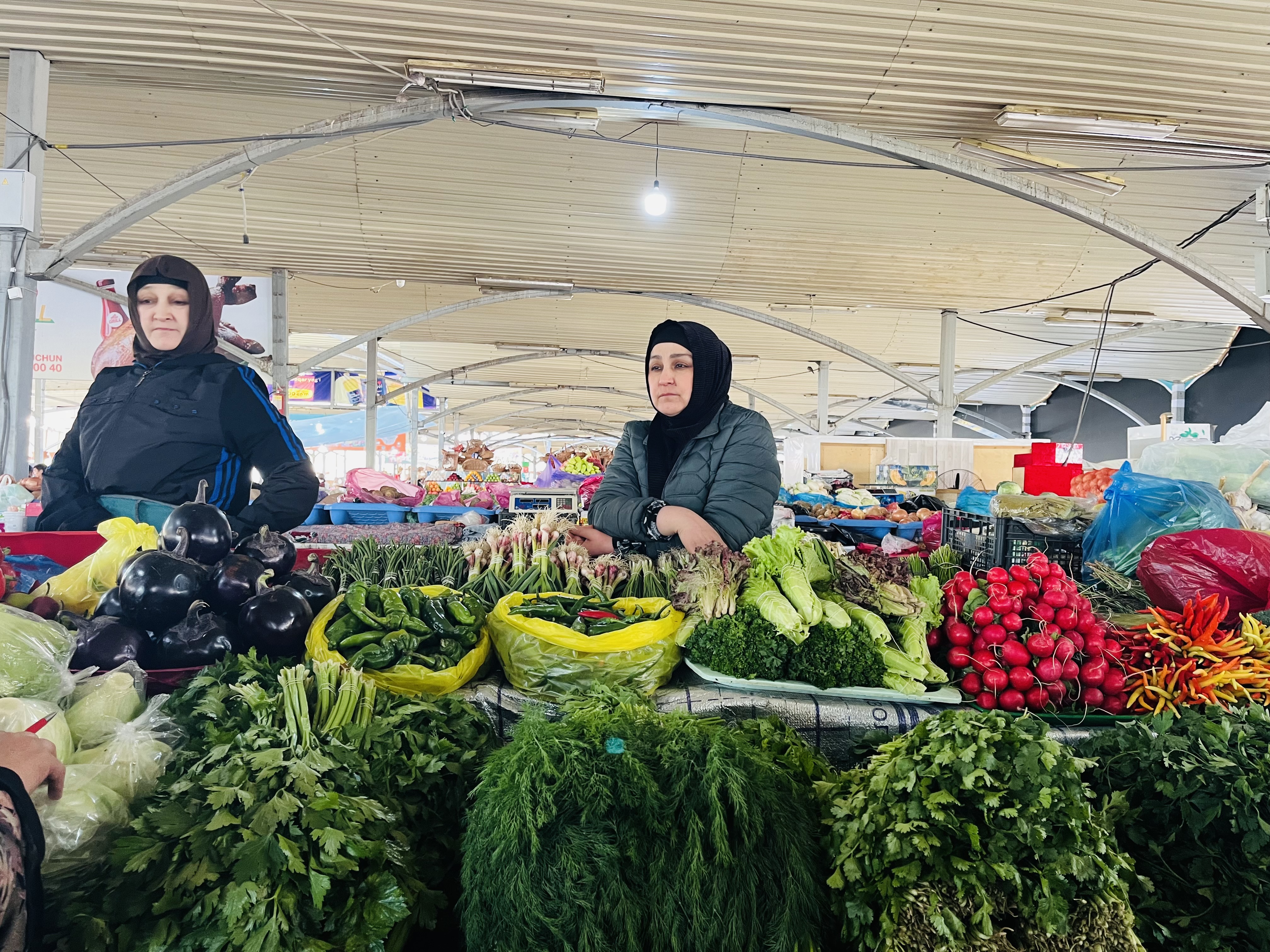
The food here is very meat-focused so I’m eating a lot of vegetable kebabs. We’ve also enjoyed some locally-produced red wine, which is mostly merlot.
Uzbekistan is famous for some of its handcrafts. The textiles are colorful and dramatic.

So is the pottery.

We’ve just arrived in Bukhara and will have more to report soon!
 Camino Milagro
Oh, Kim. You are really living the dream! I was in Uzbekistan back in 2008 for work, in the middle of winter. I will never forget the long, freezing cold train ride from Tashkent to Samarkand, with only some cheap vodka to stay warm. But O, that first view of the blue domes and turrets of the magical city of Samarkand rising up out of the horizon was unforgettable! Legend has it that Genghis Khan was so impressed by the celestial art and architecture when he galloped in from across the steppes to conquer the city, that he ordered his hordes not to touch a single building…. (history does not say how they treated the citizens.) Stay warm, safe and well fed! 😉
Thank you Fred for a great contribution to the blog. xoxox
You da Writer, woman! Xoxoxox!
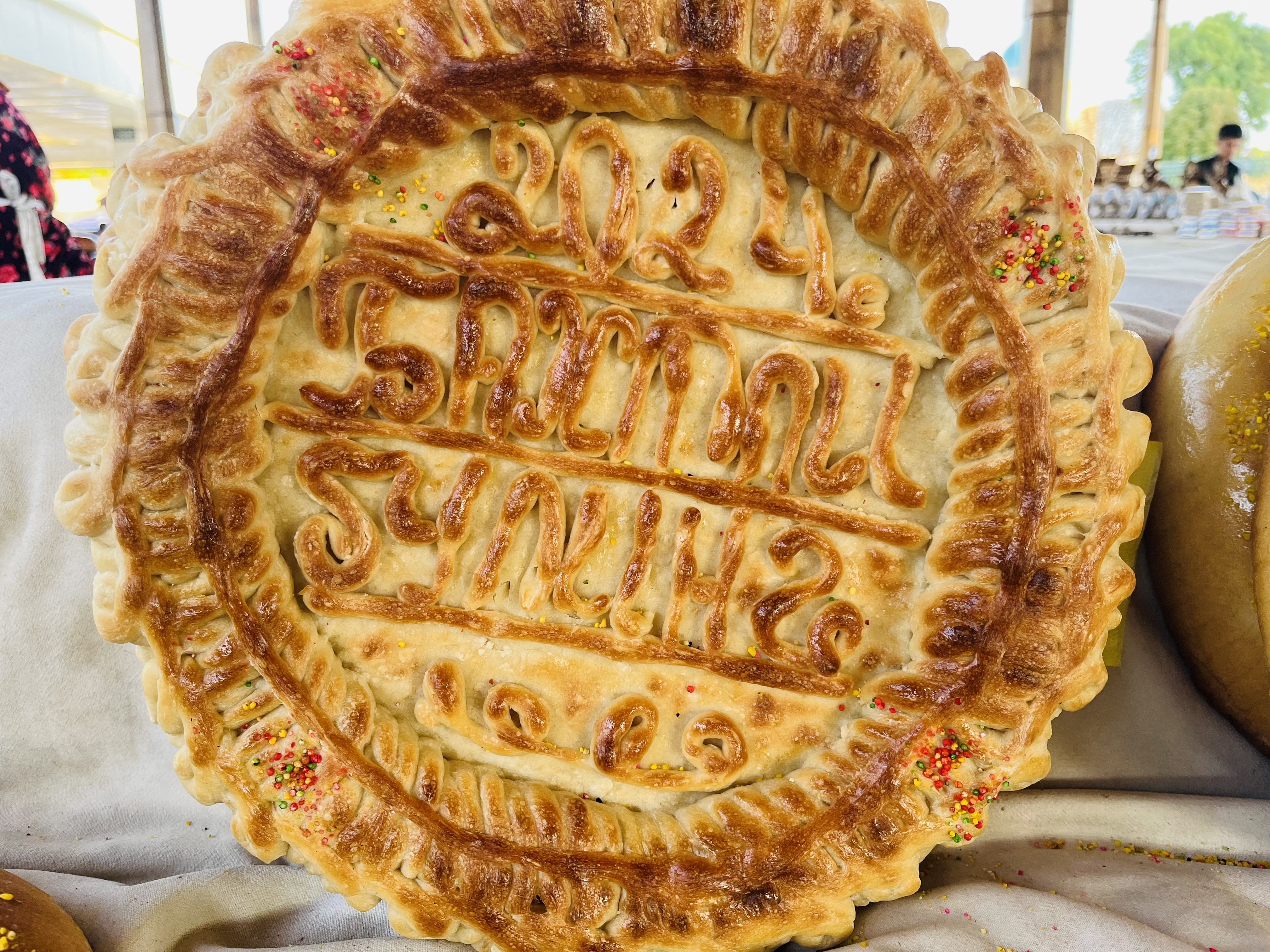
Hi Kim, what a fascinating country. The art and the colors are gorgeous. Even artwork on the bread! Thanks for sharing all this with us who are not traveling as far and wide.
Xo Janet
Yes, we are enjoying our stay here. And it is indeed far!
Wondrous photos of a unique portion of wondrous Spaceship Earth.
The architecture looks amazing as do the colorful textiles. Your narrative enhances my understanding of things. Thanks!
BUT, this is one of the few places you’ve visited which you haven’t talked about either the cats or the dogs you’ve met on your walks. Luke is disappointed.
Well, please tell Luke one of our group bought an entire lunch for a pack of cats today. There aren’t many dogs that we’ve seen!
A rich cultural heritage! The artistry in the interior of their mausoleums is incredible. That Christians, Jews, and Muslims get along just fine indicate what’s possible.
Yes for sure. It’s hopeful!
Oh, Kim(and I add your traveling companion, Susan, too) what a wonderful adventure you are having. You are educating me in areas of the world I have never been though I have traveled much—not to these distant and exotic places. The colors, textures and designs from architecture, pottery to clothing are so appealing. Thank you for opening up another part of this wondrous planet earth for me!
Thanks Sher! Yes it’s been eye-opening!
The photos are stunning. I love the commentary too. I was in Tashkent and Samarkand in the 70s. I’m sure so much has changed.
It has changed in some good ways. Our tour guide says most of the restoration here happened in the 70s and 80s so you probably missed some of the antiquities. And most of the trees are definitely less than 50 years old. You should come back!
Uzbekistan just moved up our travel priority list thanks to your blog!
It’s definitely an important piece of the global puzzle! The people are so nice and the antiquities are amazing.
Dear Kim,
Thank you for showing us such beautiful places, peoples and architectures from Uzbekistan. What a trip you must have had!
Yours sincerely,
SoundEagle🦅
Thanks for your comment! Are you a new friend or do I already know you? 🙂
Dear Kim,
The answer to your question can be found on my website.
Wishing you a very happy autumn doing or enjoying whatever that satisfies you the most, whether aesthetically, physically, intellectually or spiritually!
Yours sincerely,
SoundEagle🦅
Thanks, Kim, for allowing me to tag you on your fantastic adventure. This is the trip I always imagined…
It’s been a fascinating and fun education!
So nice to relive Uzbekistan memories through your post!
I’m hoping to someday go to the other stans!
Me too mate, me too!!!!