
If there is one thing I’ve learned in my travels, it’s that I should ask questions before I assume I have answers. A lot of what we think we know about the world is untrue, part true, or out of context. Although the whole truth about anything is beyond our reach, I wanted to know more about Saudi Arabia. So far, the people are warm and friendly, the landscape is dramatic, and the region is full of history.
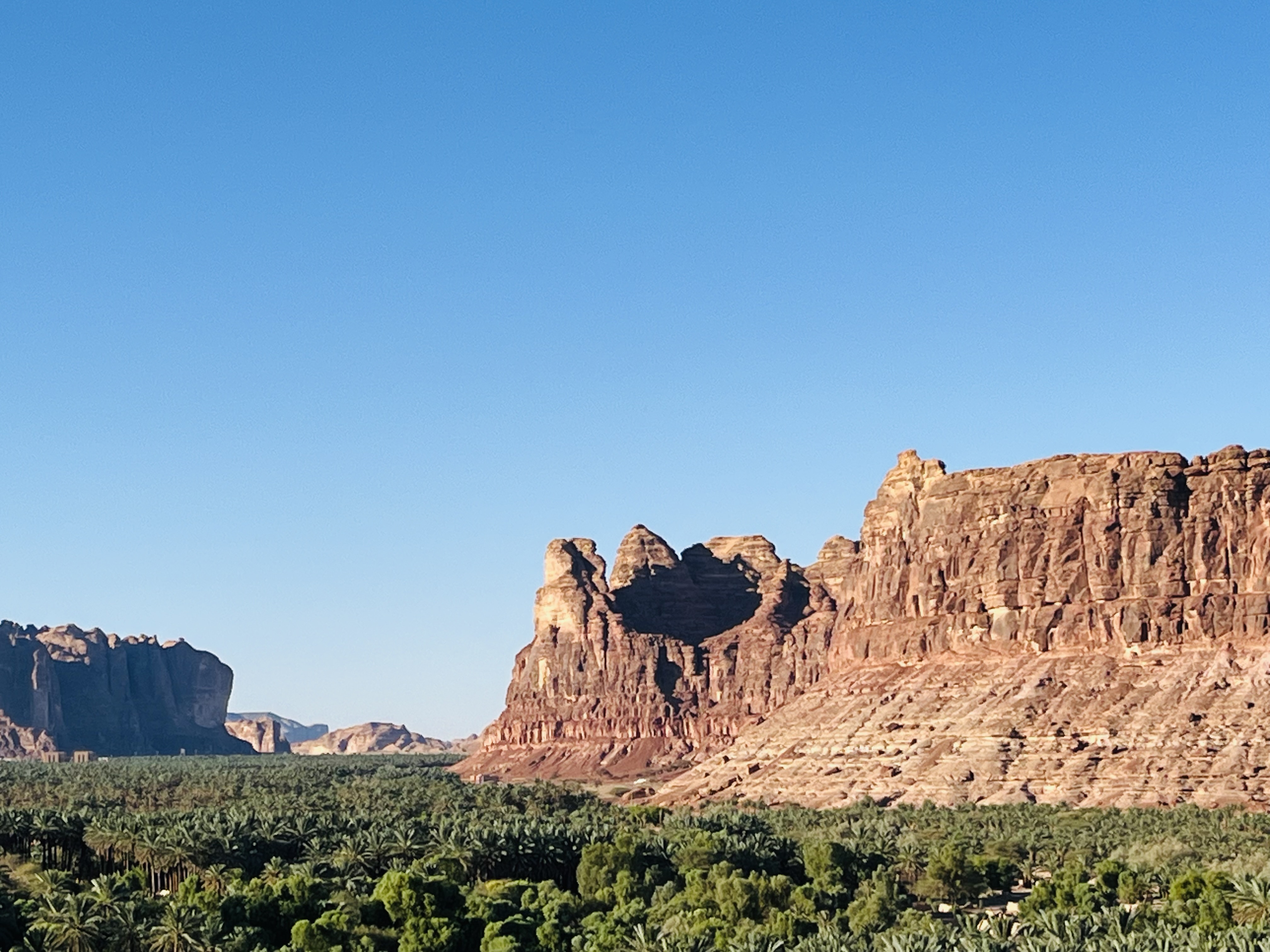
Our first stop is the northern part of the country in a desert community called AlUla. AlUla was once an important stop on the trade route between Asia and Europe. Today it’s a place of historic preservation and tourism. Imagine Sedona before it was packed with McMansions, false prophets, and shops that sell Rolex watches — but with rocks that are not quite as red and 2.3 million date palms.

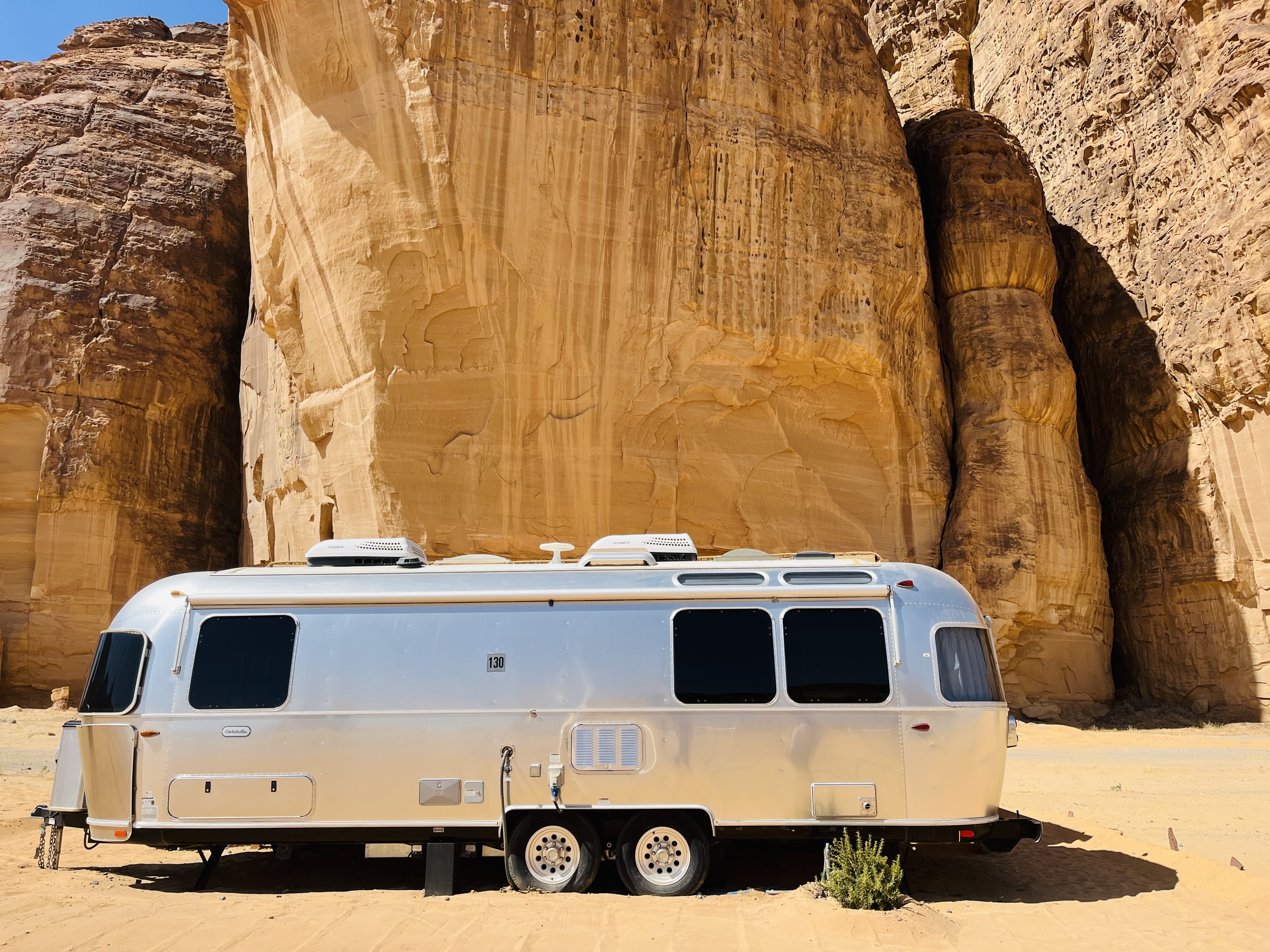
The Saudi Arabian government has poured many millions into this area. There are luxury resorts, modern roads, tours through historic landmarks, and an Old Town that is more deliberate in its presentation than Disneyland’s Main Street. I’m glad we came off-season because there aren’t many hotels and what is here is expensive. We spent our first two nights in town at a funky, over-priced apartment with a landlord who triggered my worst personality traits — but it was ok because we were close to many things we wanted to see. Now we are staying further out in the dessert where we feel like Airstream Royalty:
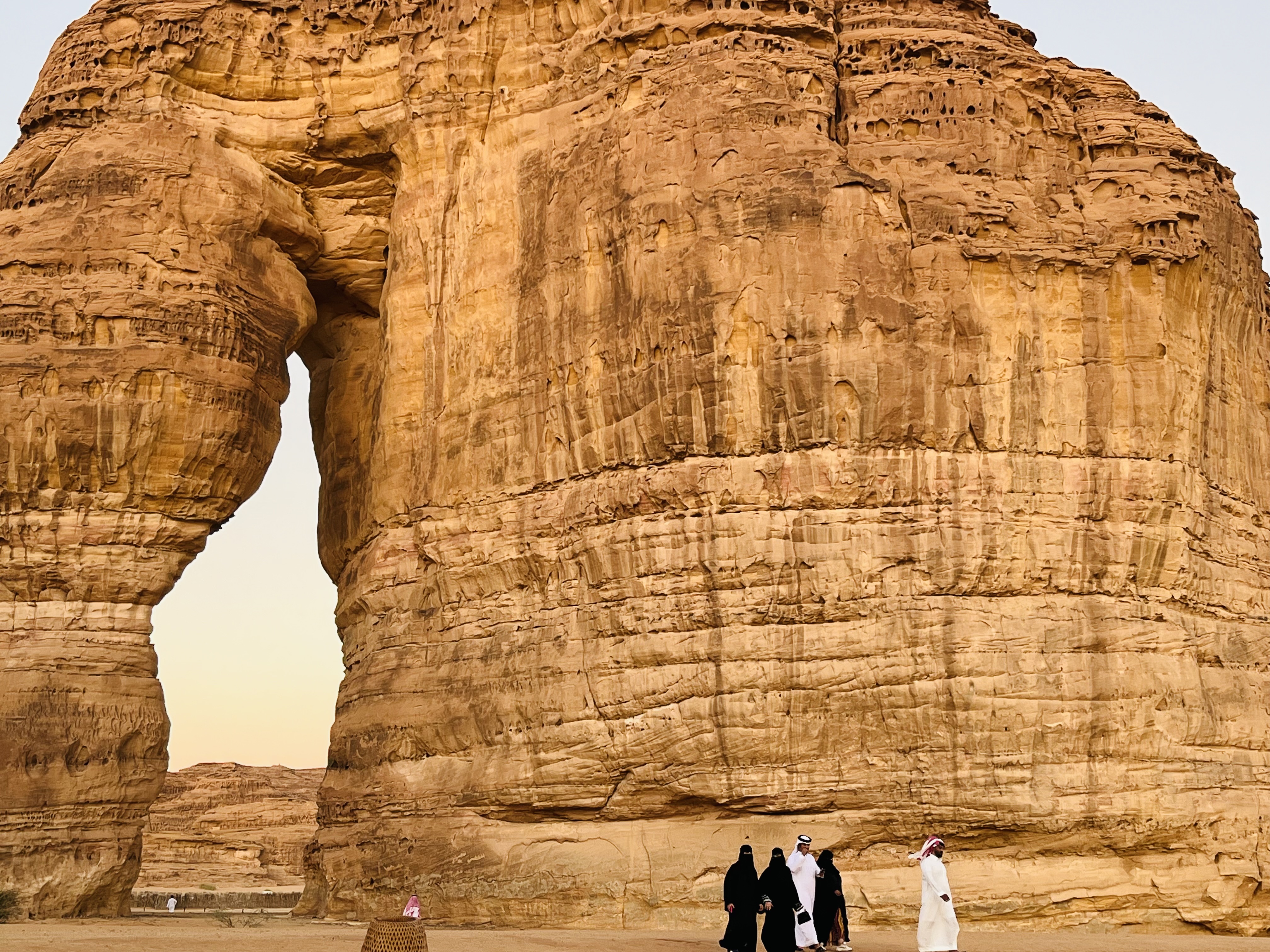
We have seen several historic places here with tour guides who are– almost certainly strategically– women in niqab (a long robe with a head covering and a mask that covers everything but the eyes). Those we have spoken with are charming, knowledgeable, friendly. They have invited us to take pictures of them and love to answer questions, including those about what they are wearing. (Saudi Arabia has not had a dress code since 2019, and the Koran does not specify any particular dress except covering your chest and modesty).
Hegra is the region’s most celebrated landmark and the country’s first UNESCO World Heritage Site. Until 2,000 years ago, it is was the home of the Nabataeans, the same community that built Petra in Jordan. The city of Hegra dissolved after the Roman Empire began using the sea for trade. All that remains of the city are tombs built into rocks, but they are spectacular.

Today we walked to Maraya, a special building we knew was somewhere down the road. I forgot the part about asking questions….It was hot and a longer distance than I expected. We forgot water. When we arrived, we found the building was closed for the season.
But, the kindness of strangers….a worker gave us water for our walk back, and a woman who works for the development company here stopped us on the road and drove us back to our hotel. So we survived. 🙂
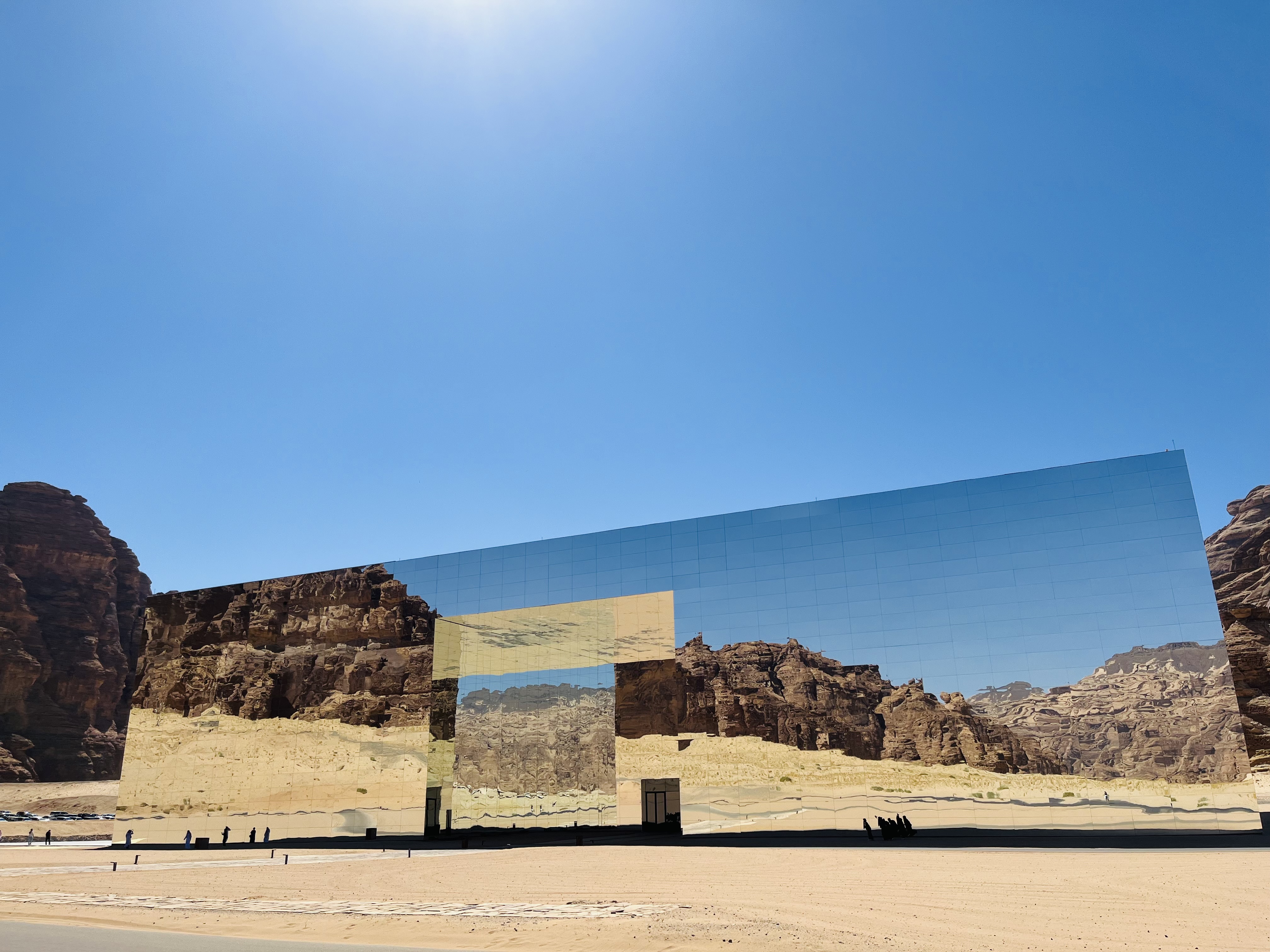
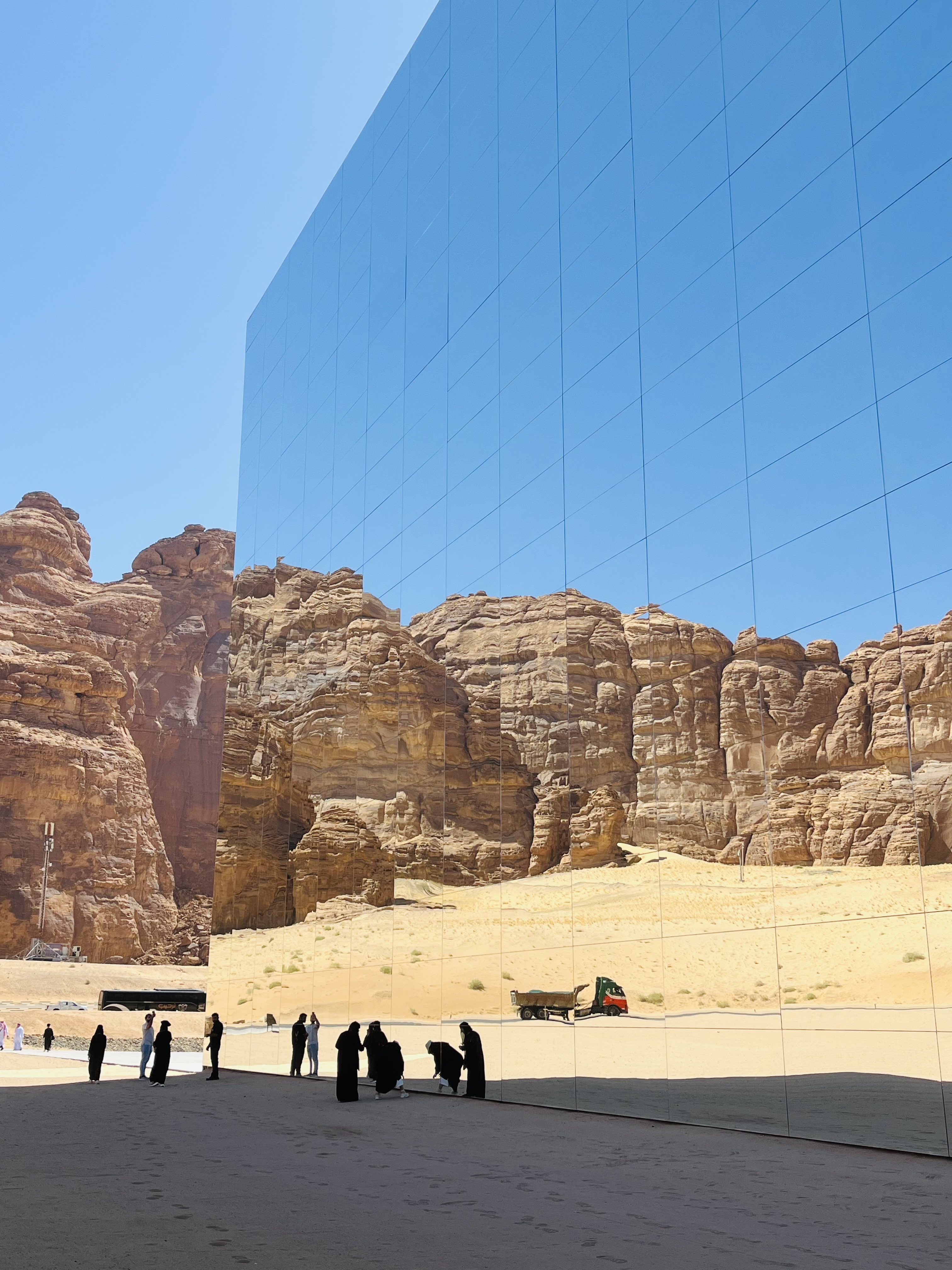
And it was worth it. The building is inspiring.
Tomorrow, Jeddah!
 Camino Milagro
Stunning landscape and historical sites, Kym. Why the mirrors? The building appears to be hiding in plain sight.
I think it was an art project! Because the country is creating tourist infrastructure almost from whole cloth, it can be quirky
wow, the trip looks amazing. Some of the landscaped reminds me of Wadi Rum in Jordan, near Petra. …. Curious what the women said about their bee keeper outfits – I don’t know why any woman would choose voluntarily to dress like that.
Thanks Marjorie! What we heard from them is this is their customary dress, (maybe just as it’s a custom for lawyers and bankers to wear suits and ties in our country — most of us wouldn’t choose to wear those but you can see them all over the place in every city)
Great overview of Al Ula. We were there last year in December.
We love it here!
Beautiful desert landscape! The Maraya building is impressive. Those mirrors could be blinding when the sun hits them! Did you happen to learn what the building houses?
I don’t know why the mirrors weren’t blinding when we were there! We certainly had enough sun on them that day. The building has a restaurant and events center inside.
You may be convincing me that Saudi Arabia is a very worthwhile travel goal in the near future!
BTW, so much of what you’ve shown here reminds me of Siwa in Egypt – one of our favorite travel locations and experiences EVER. We need to compare notes when you get home!
I think Saudi right now is a “last frontier” for cultural tourism (along with a few other places like North Korea and Turkmenistan). But if tourism continues to grow, Saudi Arabia could become a more common destination. It’s very easy to travel here — flights to all the main cities are frequent and cheap. There is a bullet train to Madinah. It’s extremely safe and not very expensive.
For some reason my comments on your past few blogs haven’t been coming through, so this is sorta’ a test posting to see if the WordPress problems have been resolved.
Your wonderful pictures on this post and the previous one of this- your latest adventure- are really well crafted and rather dramatic. No surprise to me as I have always admired your “eye”.
And your narratives are always on point and bring the reader’s attention to things they might have missed, little known or thoroughly misunderstood history, and other insights you want to share.
Keep it up! Armchair tourists such as me get great vicarious pleasure following your day to day discoveries!
And as always please travel safely.
Success! It posted using Facebook to log in because signing in with my email and password just doesn’t work. I’ll try to find out why from WordPress.
Yay you’re back!