I left Syria about a week ago, both gratefully and regrettably. On the morning I was scheduled to fly to Istanbul from Damascus, the US and Israel launched a senseless war against Iran. The war forced the closure of the airports in Syria, as well as those of many of its neighbors. At the time, I was in Damascus visiting my (amazing) nephew who works for an NGO after traveling with a (wonderful) group to Syrian cities and historic sites. I had an uncertain five days after the war started, and then a kind Canadian couple invited me to join them in their hired car to Amman, Jordan. From there, I flew to Istanbul.
For the time-being at least, Syria is safe. Although it feels strange to write of travel experiences during this time of crisis, I still want to share a little of what I learned about Syria during my two weeks there. Syria surprised me and, after visiting there, I think it’s an important travel destination — for its history, and current place in the world, and its delightful people. Syria has medieval castles, Roman ruins, ancient mosques, markets and churches, good food, and a lot more.
Context is important in making the most of travel. In the case of Syria, the most important fact at this time (besides its proximity to regional war) is that it’s recovering from more than 13 years of civil war during the brutal regime of Bashar Al Assad. More than half a million people died during the war and almost 7 million Syrians left their country for safer places, mostly in Europe. Finally in 2024, insurgents toppled the regime and the new leadership is trying to bring the country back to stability.
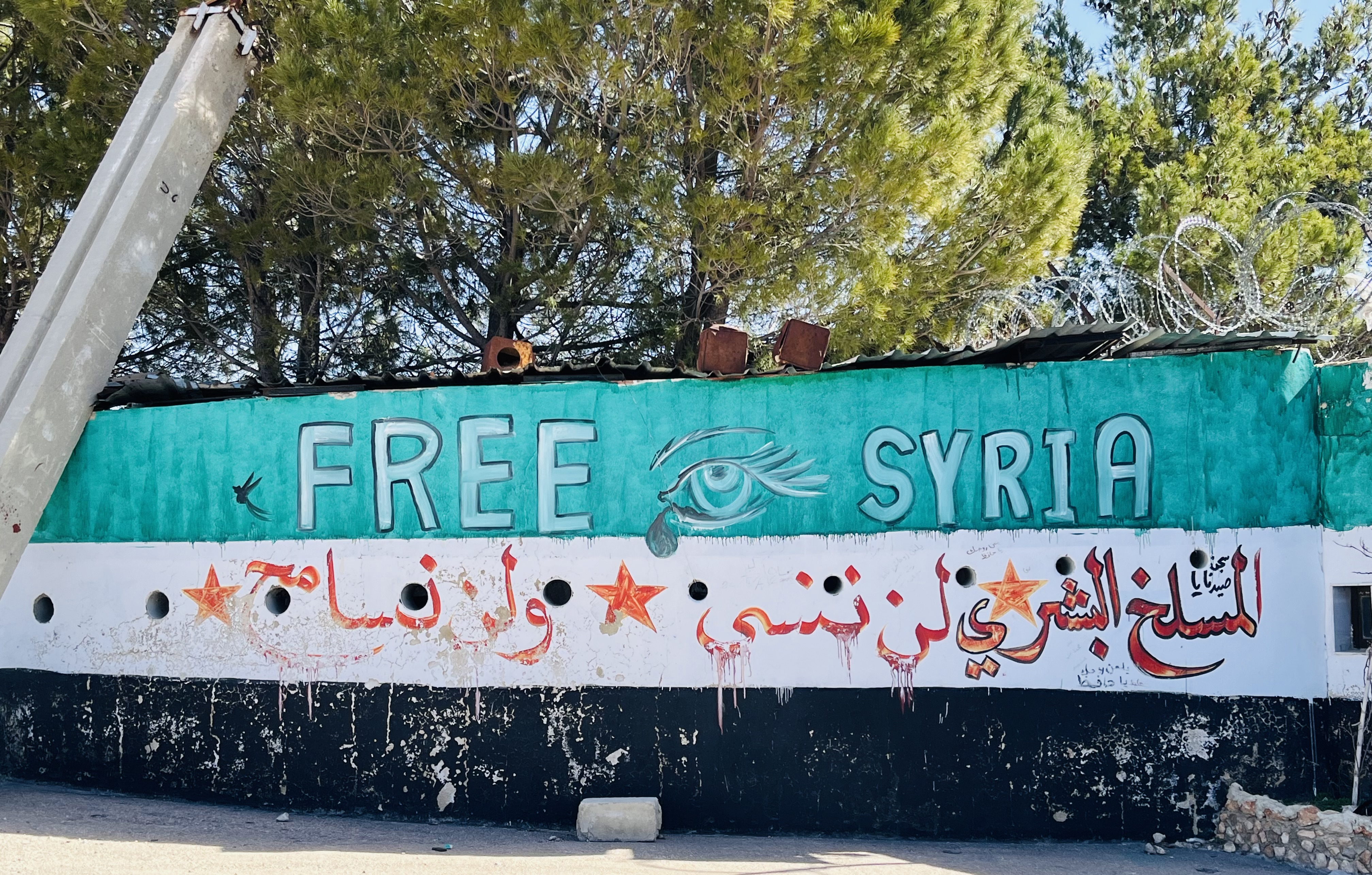
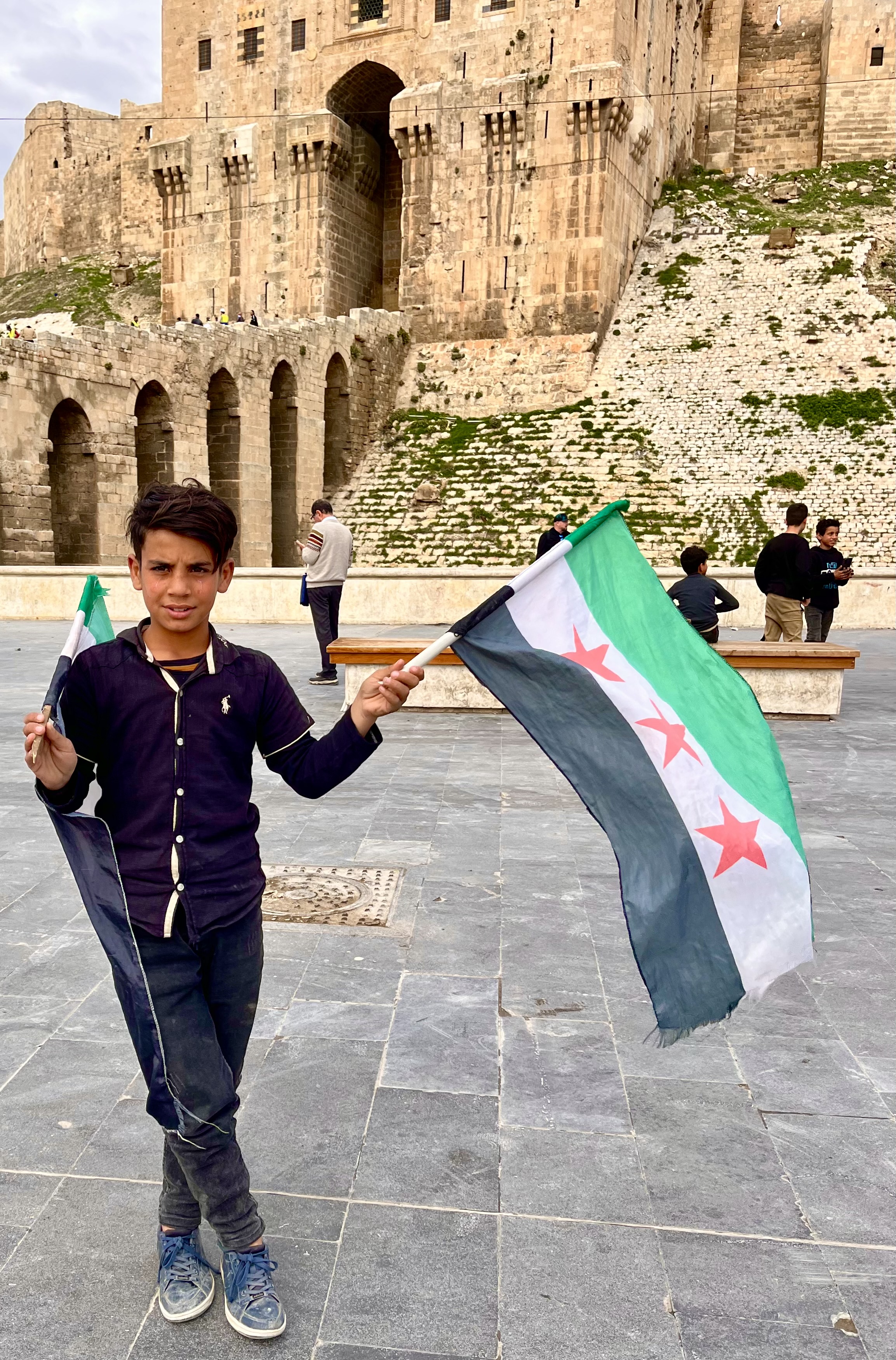
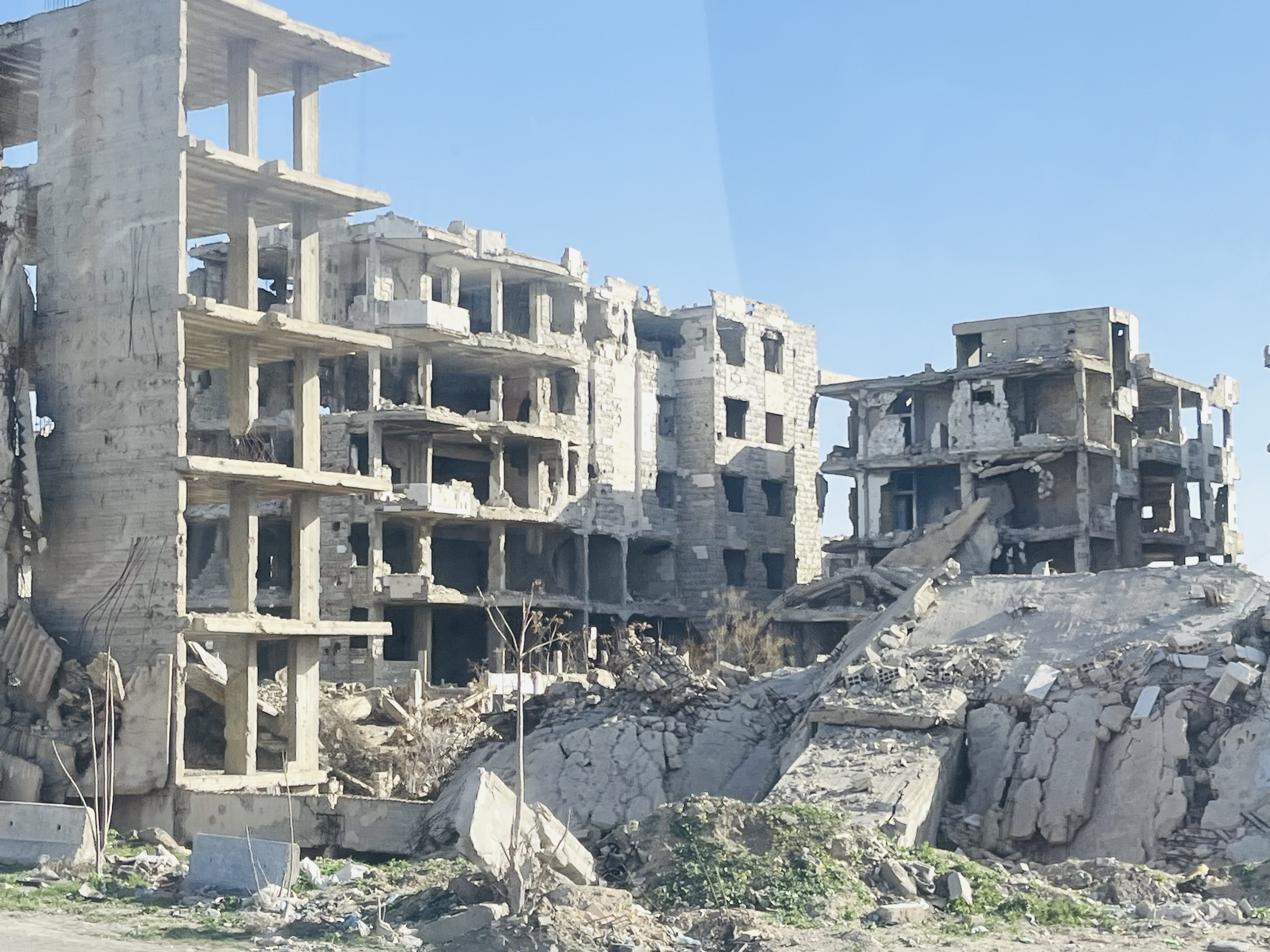
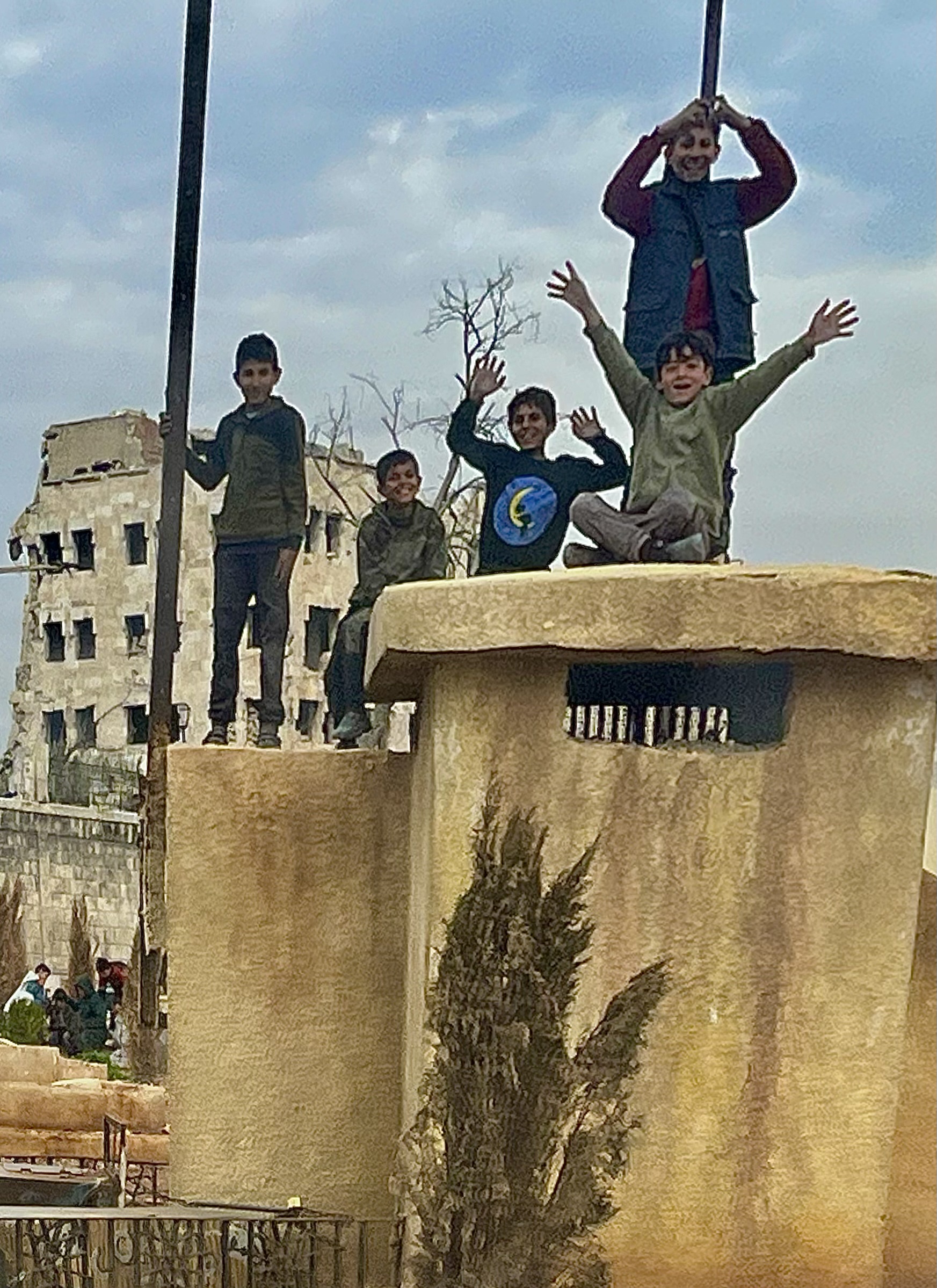
The signs of a recent war are everywhere except Damascus, which Assad managed to protect on behalf of his continued authority. The other cities we visited — mainly Aleppo, Hama, Homs and Palmyra — are full of gutted apartment buildings and public places, even mosques, churches and ancient ruins. Thousands of displaced people live in squalor in camps after losing their homes and livelihoods. Still, the feeling in Syria is one of relief. I heard many times “all we want now is peace.” There are many signs of change — a new flag, freedom to speak, a new currency, some rebuilding.
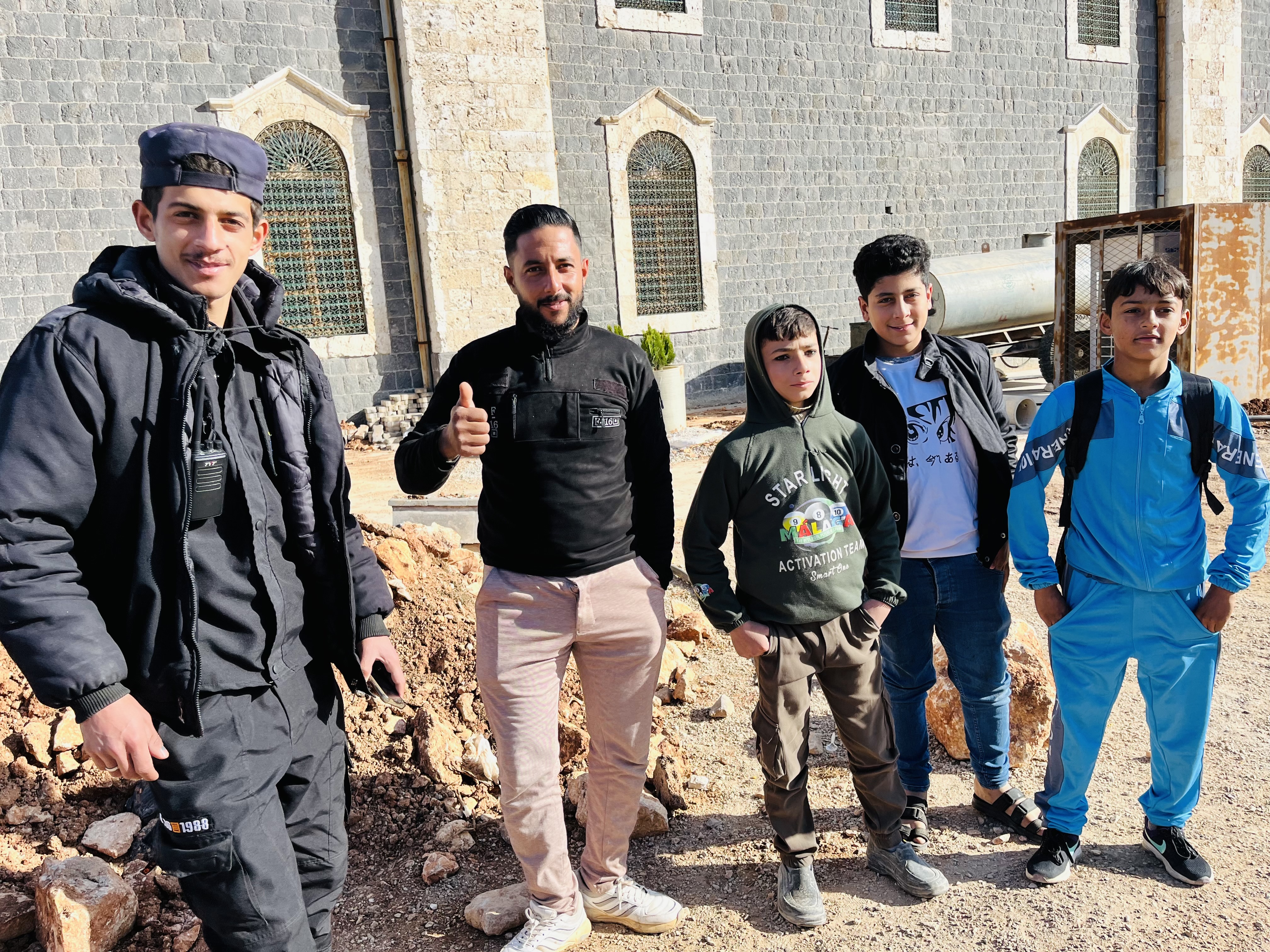
Also very noticeable — Syrians want visitors! In all of my travels, I have never felt more welcome. Everywhere we went, groups of young men and boys followed us, not to sell us something but out of curiosity and to connect. “You are welcome in Syria.” “Where are you from?” “We are glad to see you.” Women were less bold, but many wanted to make a connection. Smiles, double takes, hands over hearts.
I was also surprised at Syria’s many and varied historic sites. Syria has been a tromping ground and settlement for many groups over many centuries. Romans, Mamlouks, Greek and Armenian Christians, Ottoman Turks, Sunni and Shia Muslims, Kurds. (Sadly, a community of Syrian Jews was mostly destroyed during pograms in 1947. The few who remained left during Assad’s war).
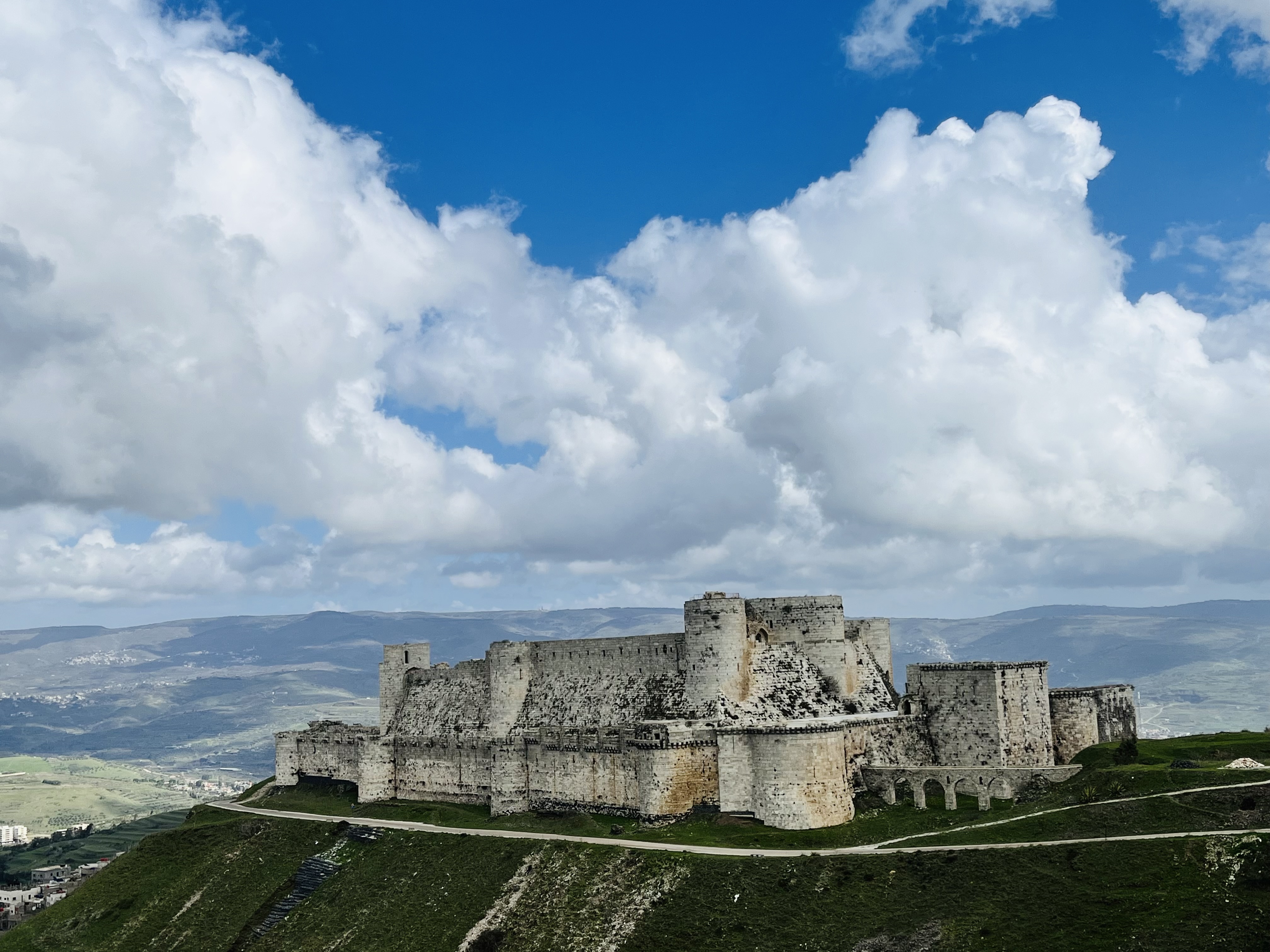
Many settlers and invaders left behind monuments. Among the most dramatic is Krak de Chevalier, a fortress built by the Crusaders in the 12th century. It’s massive and mysterious, and it’s never been successfully overtaken.
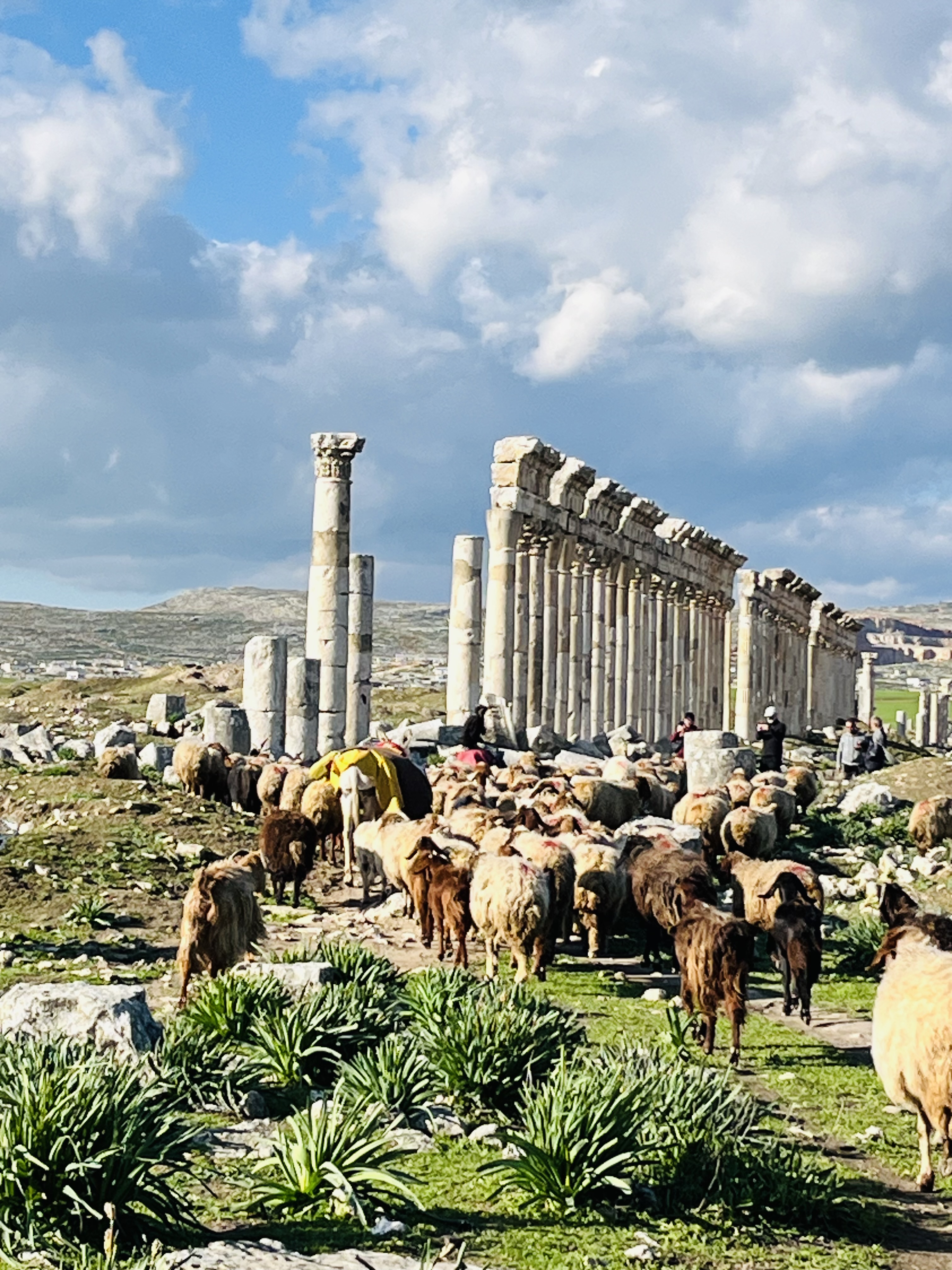
Apomea is a breathtaking Roman ruin outside of Hama. Its rows of giant columns rise from a rocky plain and would be a major tourist attraction in Europe. Because of the war, it is now frequented by only a few tourists, although it is enjoyed daily by many hungry sheep and goats.
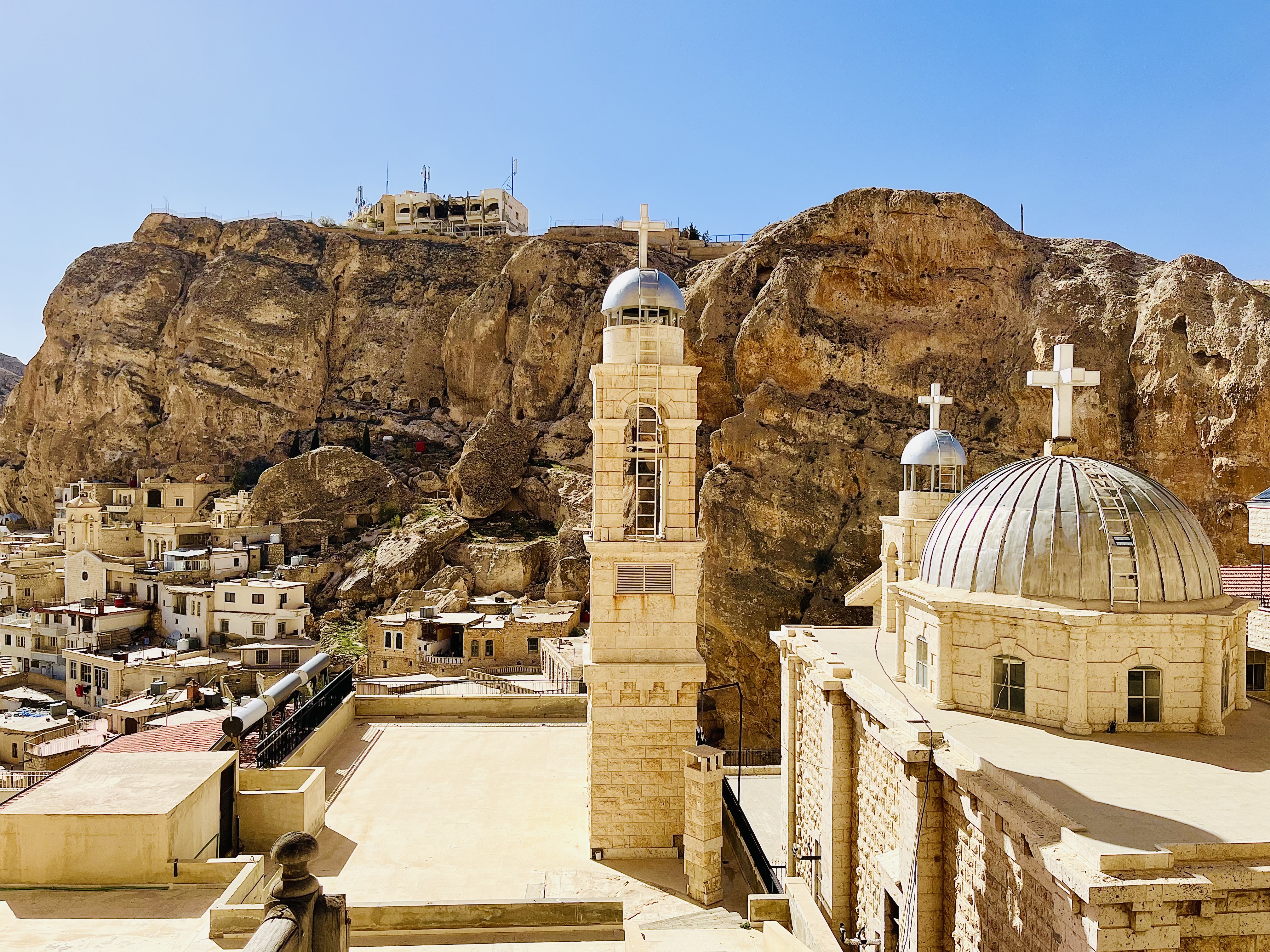
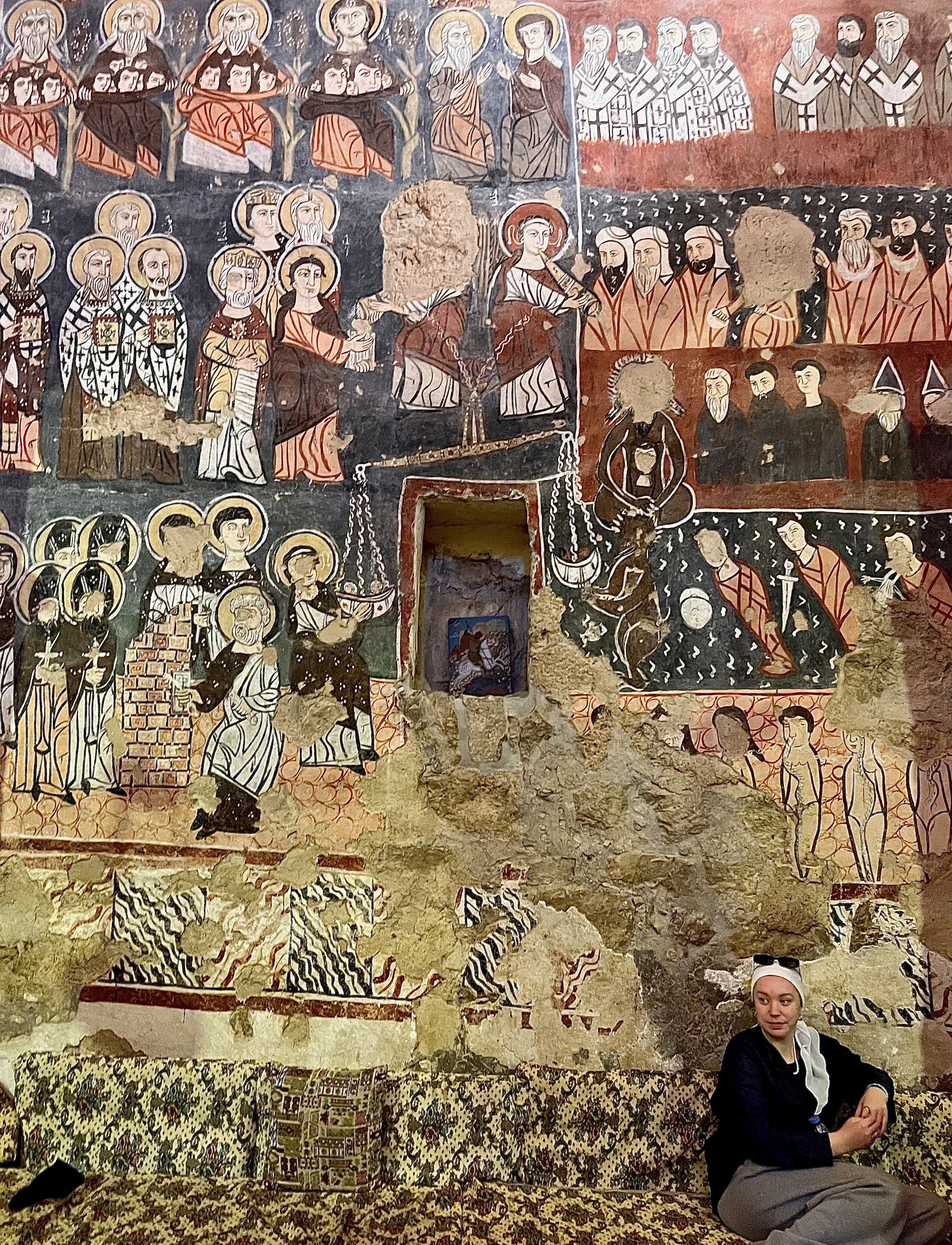
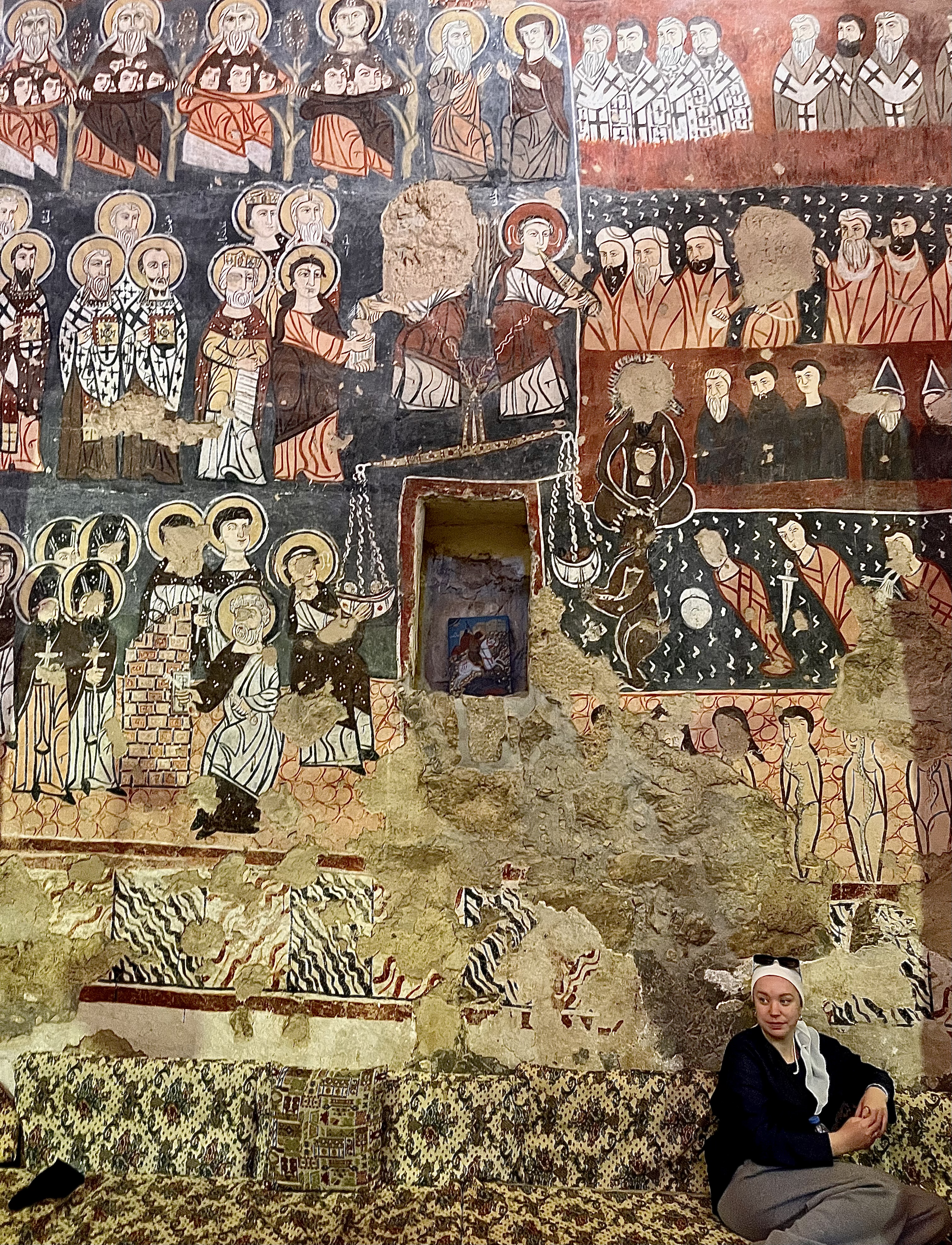
Although Syria is mostly Muslim, Christians have lived there for centuries and remain a minority throughout the country. The Greek Orthodox monastery at Maaloula — Monasterio Saint Takla — is among the most important Christian sites in Syria. Maaloula is one of the only places in the world where residents still speak Aramaic, the language of Jesus.
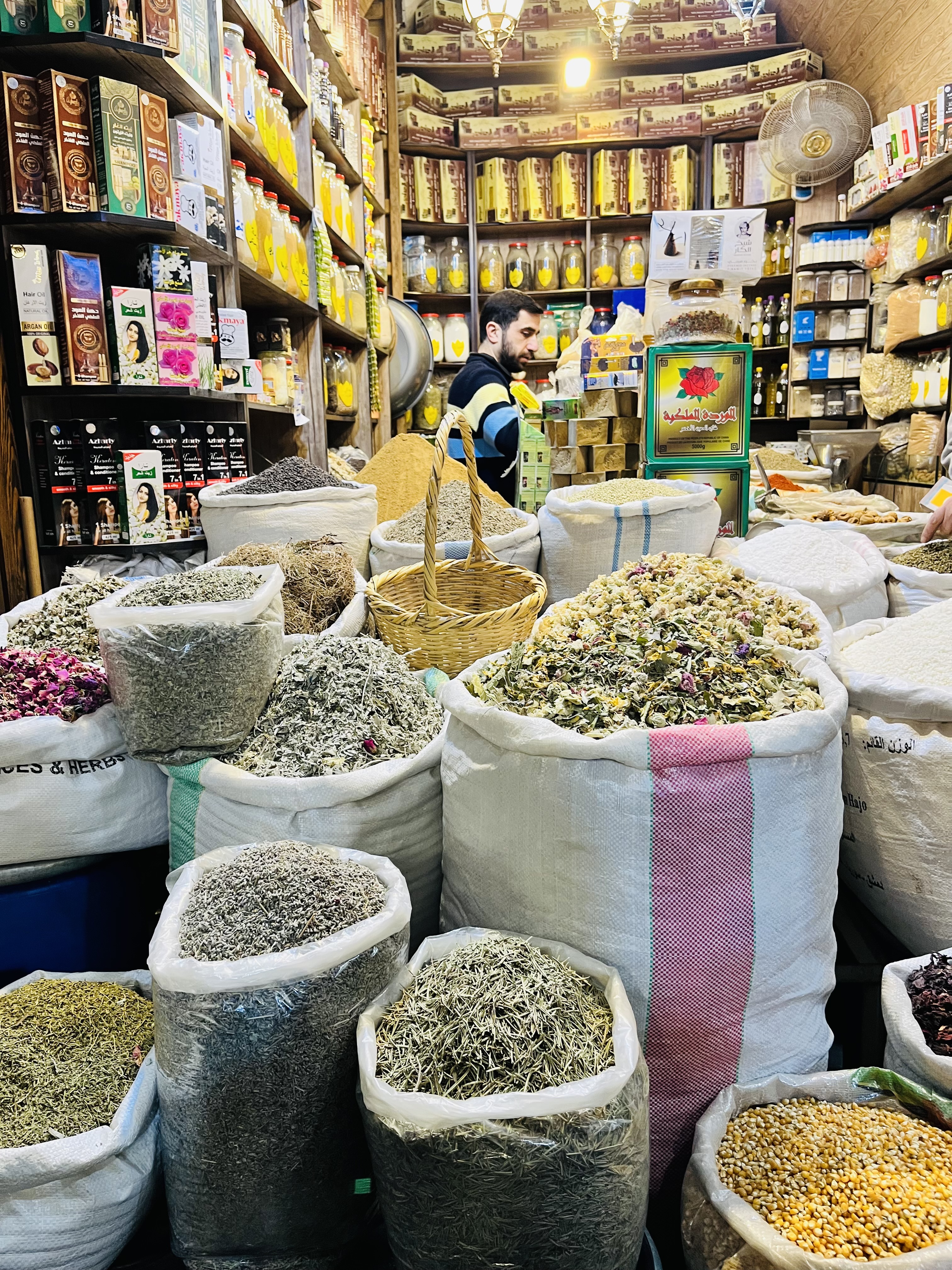
Of course, Syrian cities and towns have wonderful souks full of food, clothing and household goods. In the spice markets, I especially loved the herbal blend called the “salad mix,” which (I think) is mostly mint and parsley and oregano.
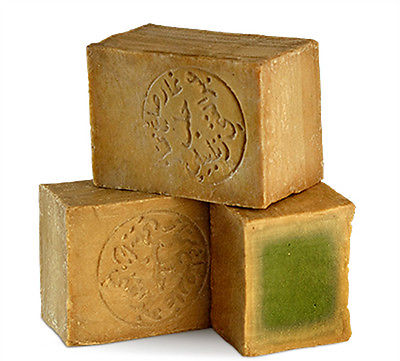
The city of Aleppo is famous for a handmade soap that has been manufactured the same way for centuries and is designated a UNESCO Heritage Treasure. It’s made of laurel berries and olive oil, and is seasoned for a year or more. Our tour guide said many Syrians are recently using more modern soaps, but keep a bar in their clothes closets for the nostalgic smell of the laurel berry.
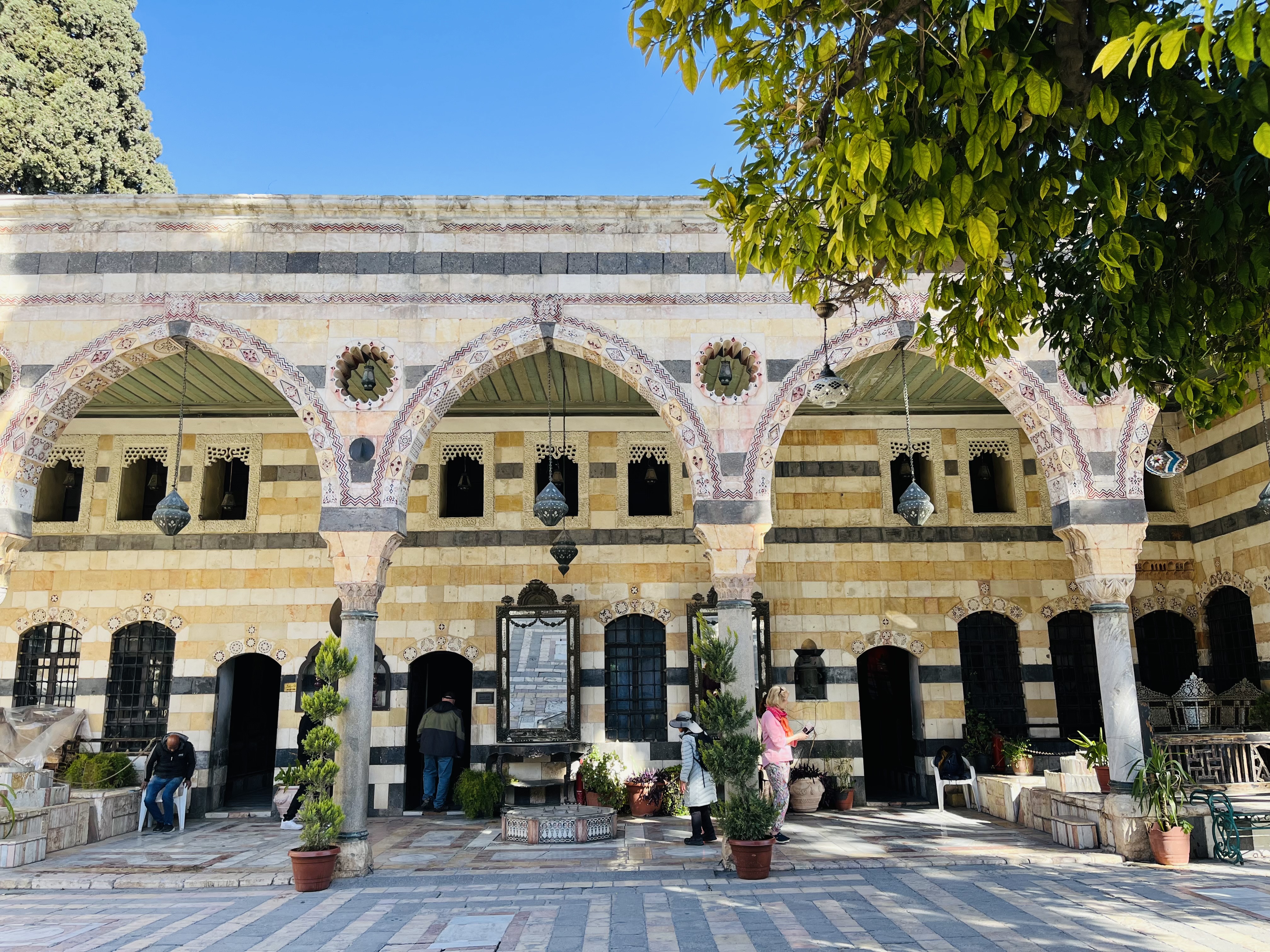
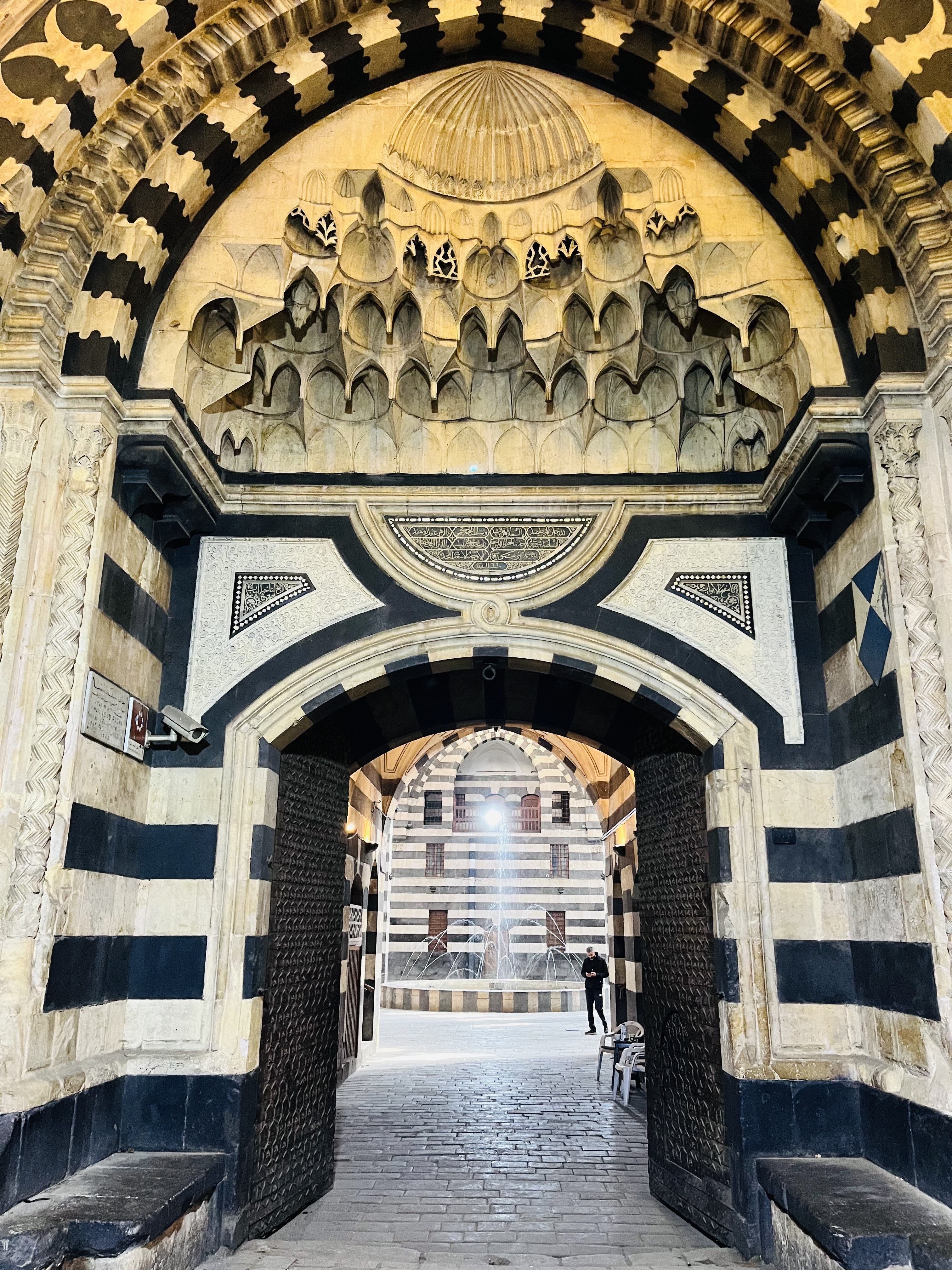
The Damascus market has a giant inn built by the Ottoman Turks who occupied part of Syria beginning in the 18th century. The inn was originally a stopping point for the caravanserais traveling the Silk Road. The black and white stripes of stone are a design of the Arab Muslims called Mamlouks, who occupied Syria for the 400 years before the Ottoman Empire took over. The building’s dramatic courtyard has recently been used for art exhibitions and gatherings.
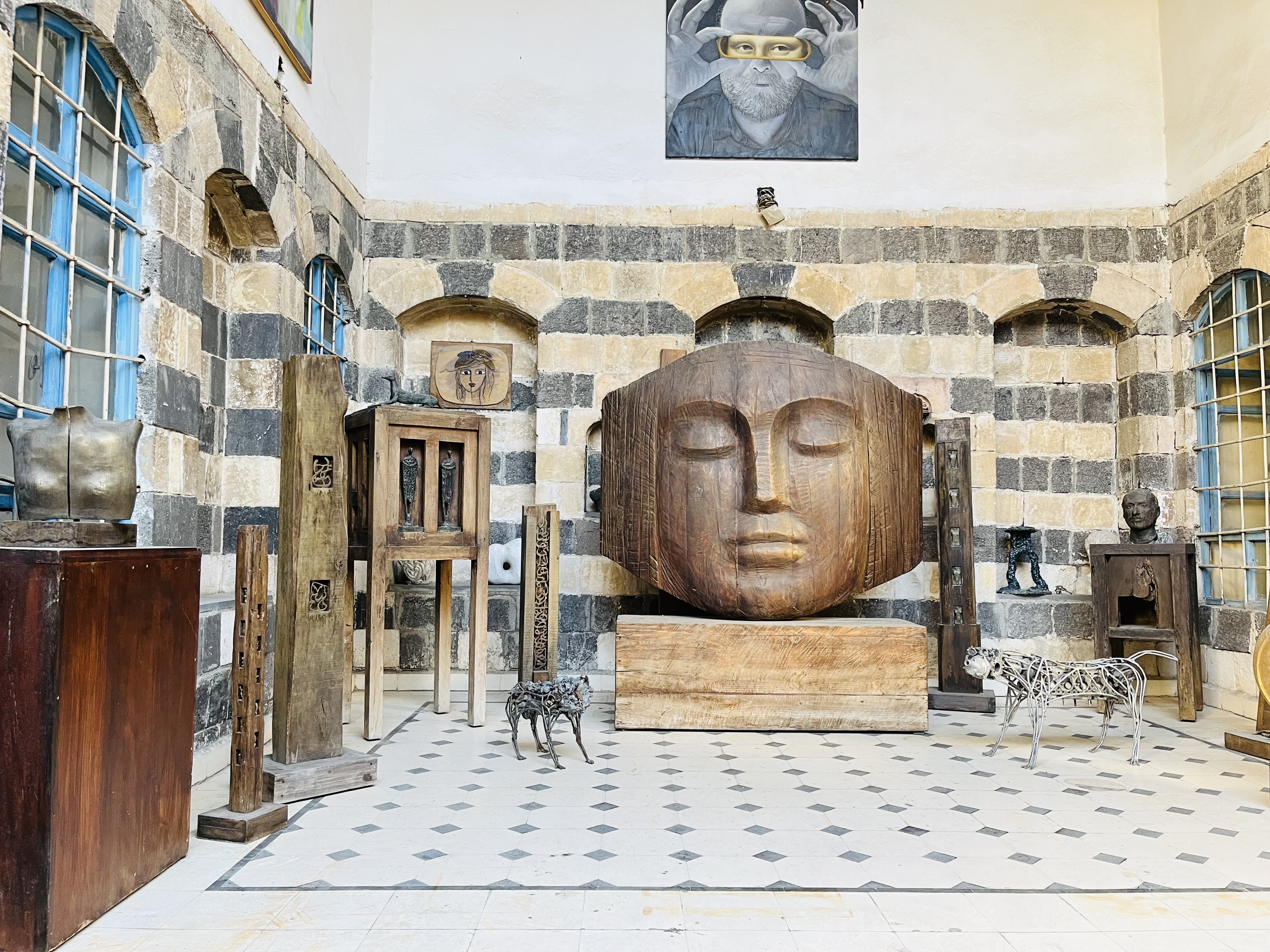
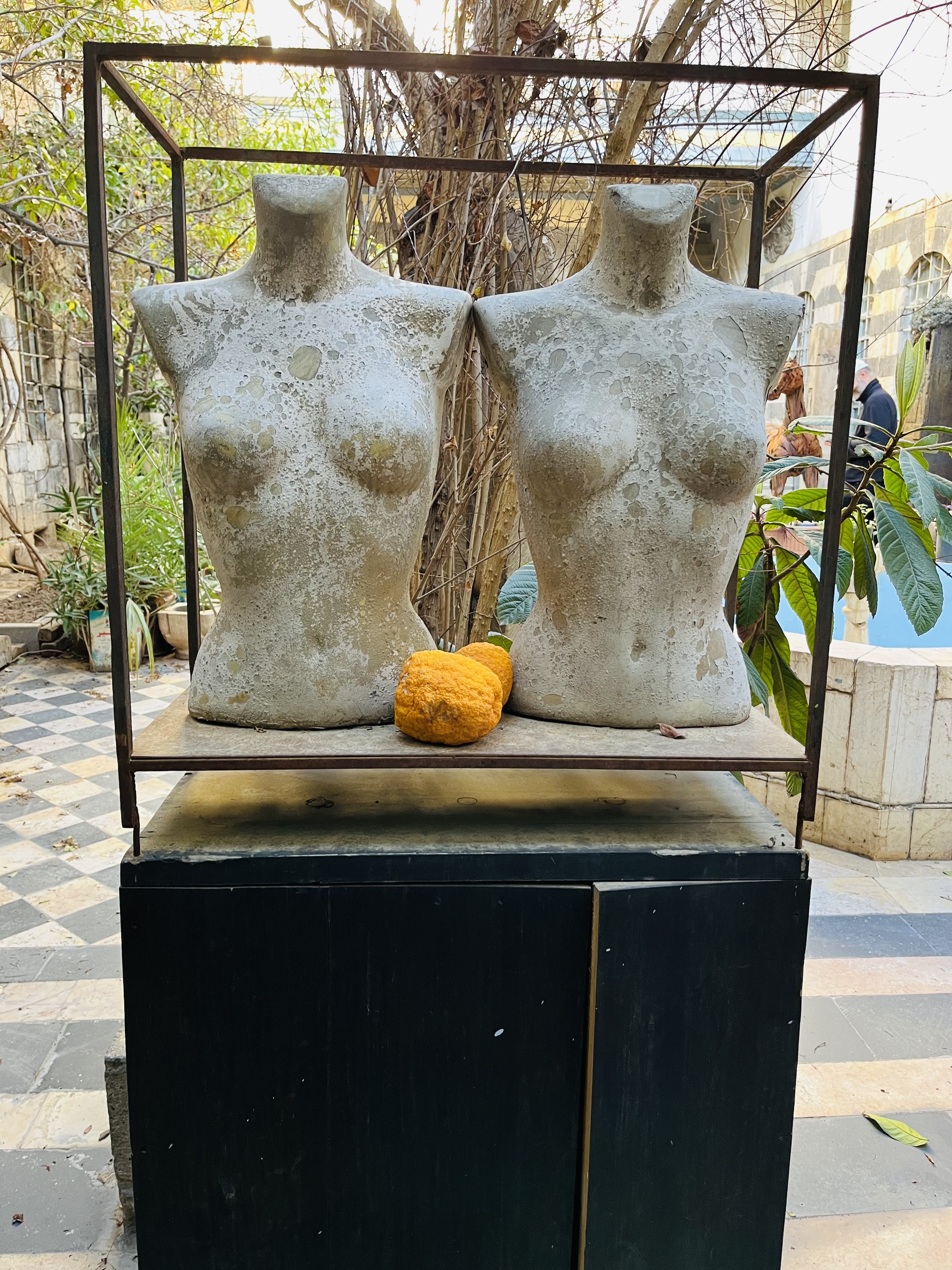
As the country recovers its freedom of expression, we saw signs of a resurgence of art. The gallery of Mustafa Ali in Old Town Damascus was an inspiration, with sculptures of bold and sometimes playful portrayals of what is enduring in the human spirit. Ali is also an advocate for his community and an activist for mutual understanding. “I want to change people’s perceptions of Syria, especially the perceptions formed by Western media,” he tells us, “People think it’s dangerous to come here. Many people have no idea there are artists in Syria and that we have such cultural activities. I want to show them how strong and alive our cultural scene actually is.” (quoted by grantourismotravels.com)
I loved Syria and its spirit. And I’m praying for peace.
Child who once was, come forth
What brings us together now,
and what do we have to say?
From “The Beginning of Speech” by Syrian Poet, Adonis
 Camino Milagro
Thanks for this commentary and report. I hope Syria recovers. It’s always been a country of scholars and sophistication. Aleppo so sadly destroyed was a symbol of that and Damascus a center of finance, culture and secularism. Islam was moderate there for centuries. I’d love to visit there.
Today I depart for my beloved SA and then onto England. I’m so excited to see friends,relatives and Cape Town.
Yes, ditto for Iran. Have a great trip, Michael!
It’s great to hear from Syria, it’s beautiful, historical sites, and people, but it’s better to know you’re safe!
C
Thank you — my feelings of vulnerability were quieted when I realized that, unlike millions of people in the Middle East, I would be able to leave.
This is one of your most powerful and interesting posts Kim! Well done.
The combination of your understated narrative and the always fabulous photos make this one “a keeper”. Those of us who follow you closely know how uncertain things were for you during this time. You somehow manage to keep yourself safe, observe the most interesting sites imaginable and soak in a sense of “mise en scene” and effectively share your observations with readers.
Looking forward to hearing more from you!
More is coming. This kind of travel is addictive.
Very interesting post! Thanks for sharing your experiences about Syria.
Thank you for your comment!
if i were a prayer I would pray for peace
You are amazing
Yes, I’m an agnostic but I decided to take back the word! We are all pray-ers, I think, but we might call it something else.
Kim, this is a wonderful post. Makes me want to visit as it is so interesting and sounds like such a rich culture. I hope the insanity of this war ends soon and Syria and the rest of the world can have some peace. It sounds like a fabulous place. Glad you are out of the mid east now and safe travels wherever in the world you end up in the next couple of months. Xo Janet
Hi Janet, peace is possible, but is apparently more difficult than war for most leaders.
I had wondered why you chose Syria at this moment and knowing your nephew is there makes sense although you might have gone regardless! Thanks for another fascinating look at a destination I may never get to. Glad you made it out safely. I’m off to San Antonio to do immigration mutual aid and witness at Dilley concentration camp. Aloha and love
Thank you for ALL the amazing work you do to support people in the worst situations. Promoting peace….
Kim, I didn’t know that it’s now safe to visit Syria. I’m happy to see that there are still so many ancient sites/structures still standing and that the people are welcoming. What a relief it must’ve been to make it safely out, following the outbreak of war in the region.
It’s a wonderful country that deserves peace.
I love all the information you squeezed into this post and I think I love Syria now too.
Syria is lovable!
Kim, of all of your posts, This is the most special as I felt I was connected to you
Thank you Christine! I think the biggest benefit of travel lies in your word “connected.”
thanks so much, fascinating, perceptive , human and connected. Stan
Hi Stan, I think you are a role model for human and connected. xoxox