
Qatar’s desert is mysterious and austere. It’s also home to some incredible art. We spent yesterday with our guide, Abdelziz, seeing some of it in the northern part of the country. We left our hotel early but not early enough to avoid the heat. This turned out to be a good thing because, for me, the heat was an important part of the experience.
The drive was easy during the first hour. Qatar has great modern roads that are mostly empty. We stopped at an Arab horse ranch and some of those horses would sleep at the foot of your bed (I loved them so much). The last 20 minutes was off-road and Abdelaziz’s car wasn’t exactly new, so I found myself wondering whether we had enough water to walk back to the highway. I stopped thinking about that when we arrived at the site of a breath-taking installation by Richard Serra.

“East-West/West-East” is 4 46-foot tall steel monoliths aligned over a flat kilometer of sand. We walked most of the distance in the searing heat, connecting with the harsh desert and these powerful steel slabs. The horizon suggested the cool waters of the gulf but water was never visible. It seems to be part of the message that the installation is so isolated and that the medium is steel, which radiates more heat. The effect is other-worldly.
An hour later, we arrived at Al Zubarah, a UNESCO World Heritage Site of a restored fort and the ruins of an ancient city. We couldn’t get to the city, but hung out at the fort, which protected an important pearl-fishing and trading site in the 19th century.
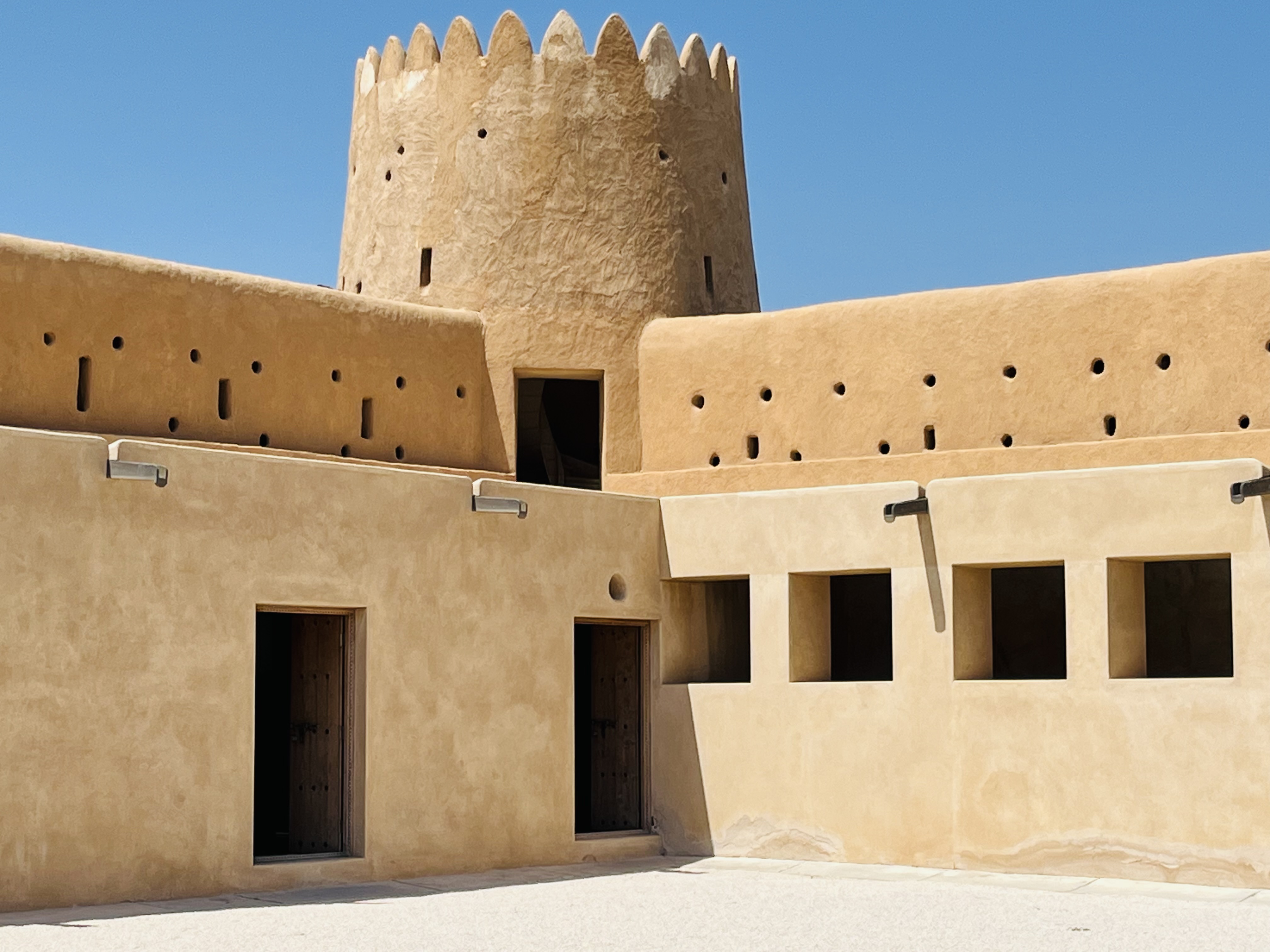
My favorite feature of the site was the sculpture in front, which was installed by UNESCO. The same sculpture is apparently installed in many other World Heritage sites. We don’t have one of these in our home town of San Miguel de Allende (which is also a UNESCO World Heritage Site), but we thought of a few places in town where we would love to see one.

Our final stop was a giant installation by Danish artist, Olafur Eliasson, called “Shadows Traveling on the Sea of the Day.” It charmed us! From a distance, the installation seems to be randomly-placed metal rings and slabs. But as you interact with it, you realize that all the rings become circles and semi-circles — depending where you are standing in relation to the mirrors underneath the slabs. The forms together are a pentagram, an important symbol in Islam and Judaism representing the Seal of Soloman.
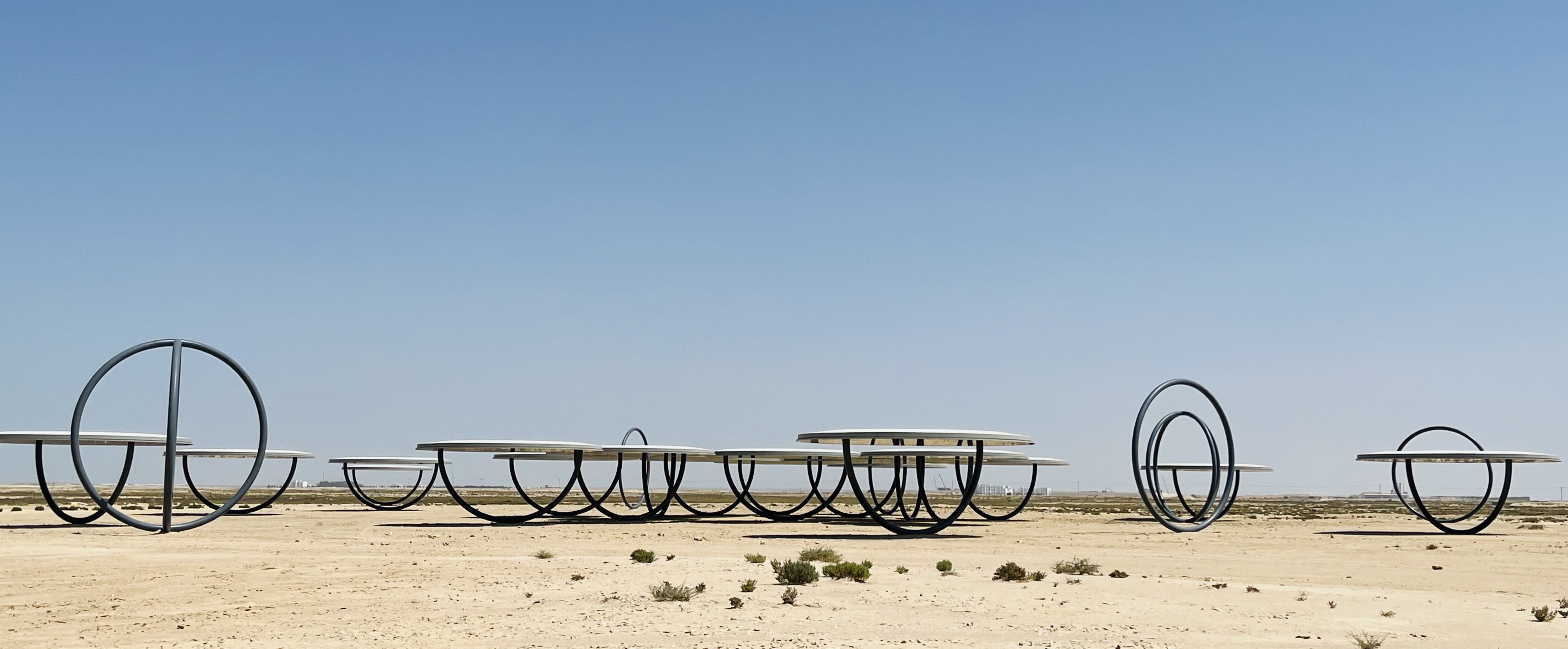
There is so much metaphor here — some of the metal structures seem isolated from the whole but invariably became a part of it because of the mirrors and depending on where you are standing. It seems to say, “We can be united and whole when we reflect one another.” “We can be outliers and still part of the community.” “We complete each other.” In spite of the heat, it was hard to leave the installation because every turn seemed to bring more surprises in how the forms interacted with us and each other.

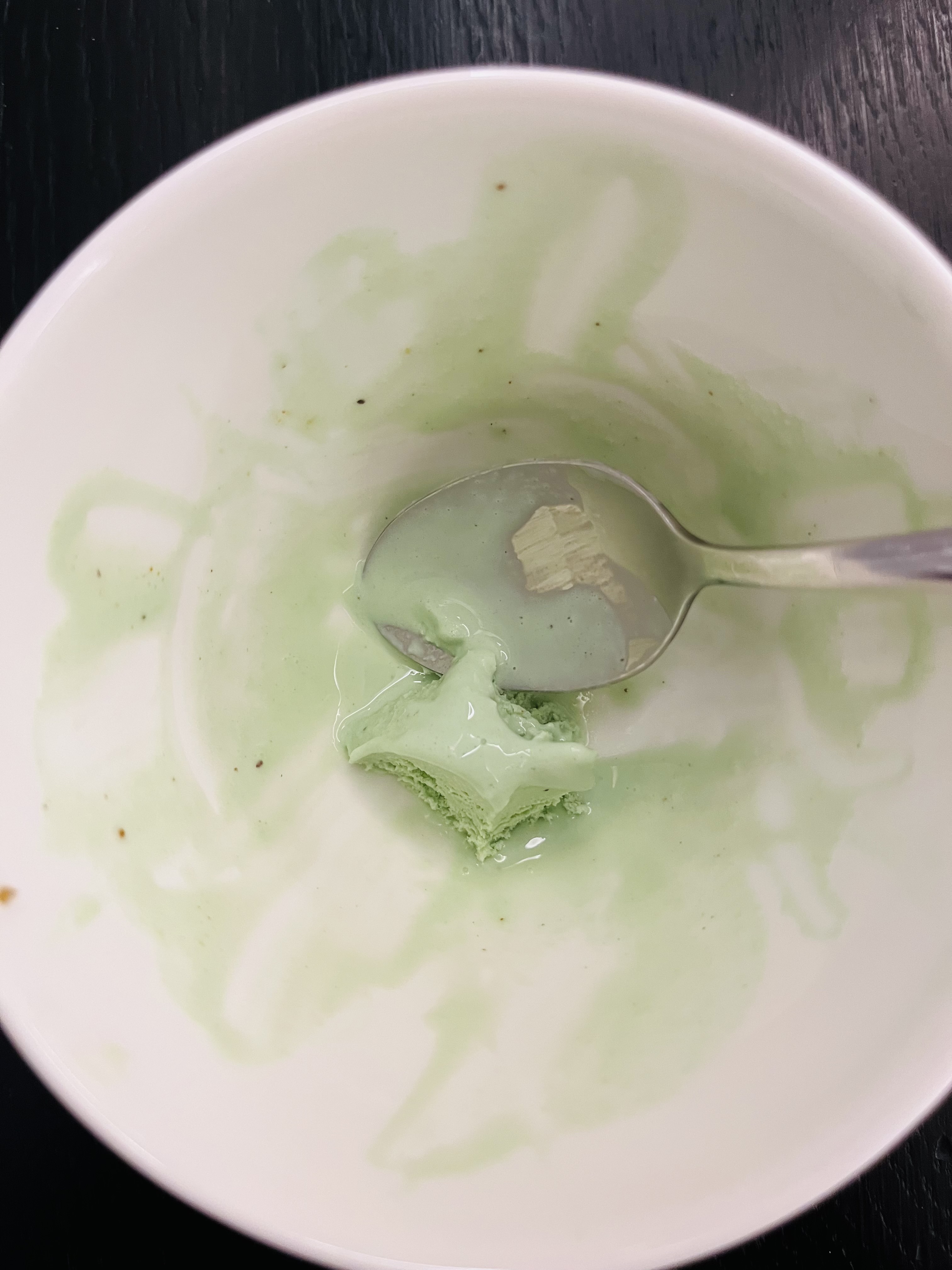
We finished the day at a highly rated restaurant that seemed to say “It’s actually possible to make an undrinkable mango lassi and an inedible Indian curry” LOL. We happily returned to our hotel cafe for bowls of the best pistachio ice cream ever. (We miss you, Jeanne!)
 Camino Milagro
Absolutely breathtaking!!! Thx Kimmie!
🙂
Art everywhere, composed of elemental planes and circles, even the bowl of pistachio ice cream.
¡Aventuras increíbles! Gracias por compartirlas. Armida.
Gracias Amiga! ¡Una cosa curiosa que no he mencionado es que Susan a veces accidentalmente habla español aquí!
An interesting concept in turning the stark desert landscape into an open art gallery. I find the “Shadows Traveling on the Sea of the Day” quite fascinating 🙂
It’s stunning really!
Thanks for this Kim, so enjoyed the descriptions and giving your experience context. It made the desert vastness relatable in a fresh way.
Hi Kirsten, thanks for the nice note. We are having a great time!
Excellent! Certainly seems so from what Susan says.💕
There is something so special about the wide open spaces of deserts. And to find so much art in one – amazing and beautiful!
Yes, the two together are inspiring!